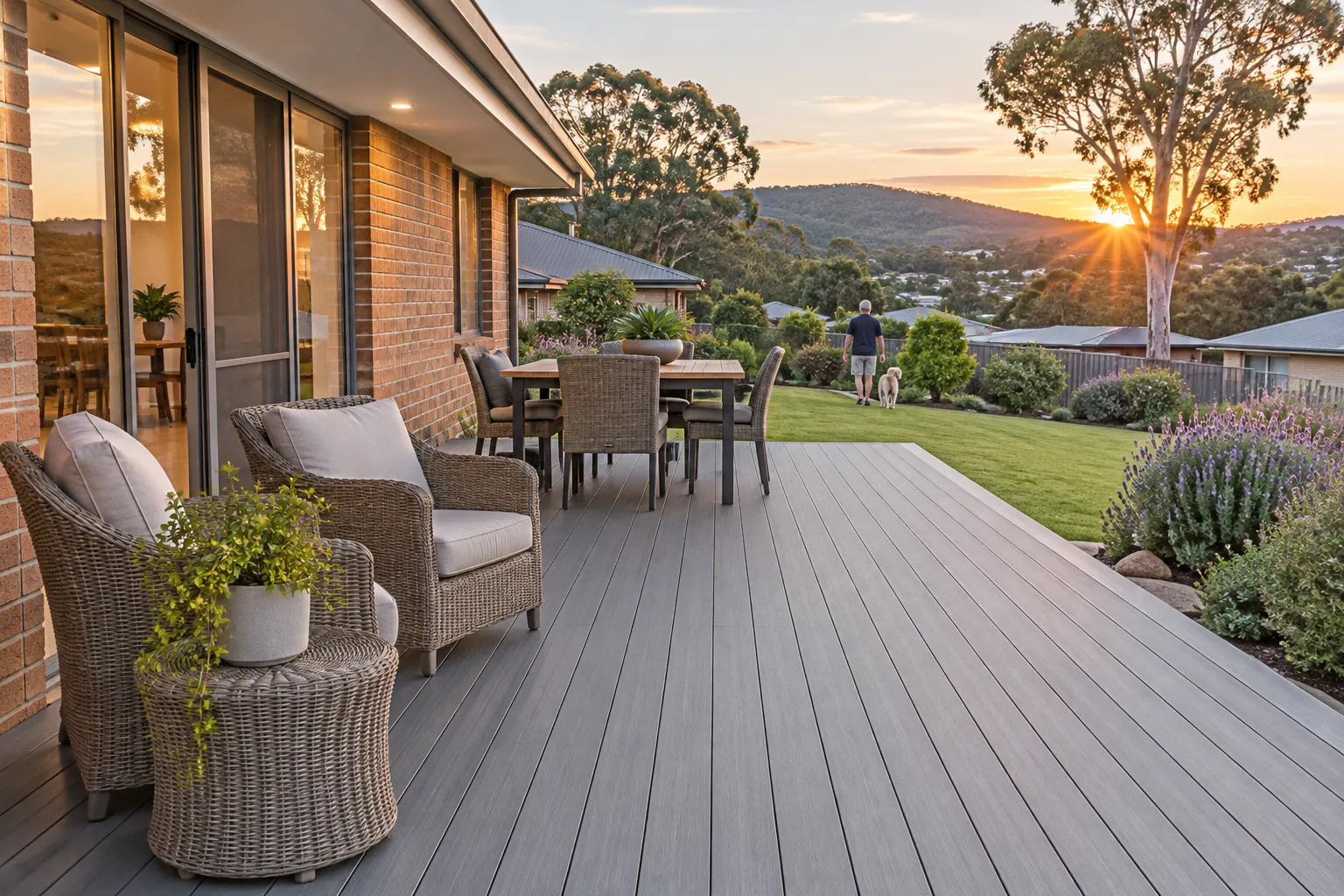
Capped composite decking is a composite board with a hard polymer shell bonded around its core, on the top and usually the sides. The cap protects the wood and plastic core from water, stains, scratches and sunlight, so the board holds its colour far longer than an uncapped one. Most premium composite ranges are capped now. In Albury's strong sun and big temperature swings, capped boards are usually worth the extra. For how composite compares with timber and what it costs, see our main composite decking page.
What is the cap on a composite board?
The cap is a thin outer layer of tough plastic, often polyethylene or a similar polymer, wrapped around the composite core during manufacturing. It forms the surface you walk on and see. Because it has no exposed wood fibre, water, grease and wine can't soak in, and the colour pigment in the cap is designed to resist fading in sunlight.
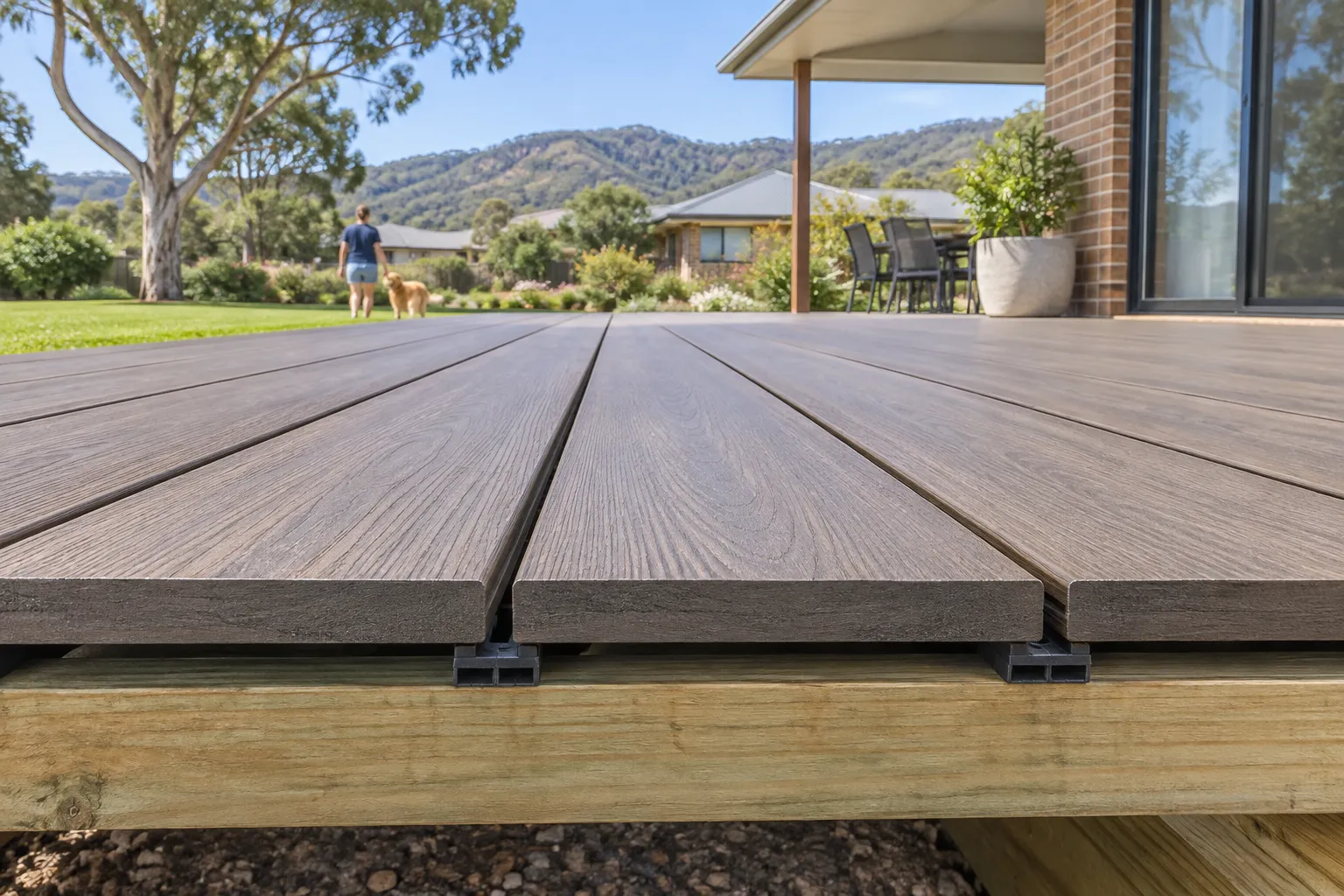
Some boards are capped on three sides, top and both edges, and some on all four. The underside is often left uncapped to let the core breathe. Check the product sheet to see exactly which faces are protected.
Capped vs uncapped composite decking: what's the difference?
Uncapped boards are the same material all the way through, with wood fibre at the surface. They're cheaper, but the exposed fibre absorbs water and stains, can grow mould, and fades faster in sun. Capped boards have a sealed surface that resists all of that. Most older composite decks with grey patches and black mould spots are uncapped.
| Uncapped | Capped | |
|---|---|---|
| Surface | Wood fibre and plastic exposed | Sealed polymer shell |
| Stains | Soak in | Wipe off more easily |
| Fading | Faster | Slower, often warranted |
| Mould | More likely | Less likely |
| Scratches | Show the core | More resistant |
| Cost | Lower | Higher |
For the broader comparison between ranges, see the best composite decking guide.
Is capped composite decking worth the extra cost?
For most decks in Albury, yes. Published Australian guides put standard composite at about $280 to $700 a square metre installed and premium boards, which are usually capped, at about $450 to $900. The extra buys better resistance to fading, stains and mould, and usually a longer warranty. On a deck in full sun or one that gets a lot of use, that difference shows within a few years.
When uncapped boards can still make sense:
- A small, shaded deck where fading and heat aren't a concern.
- A tight budget where you accept the deck will weather.
- Temporary or short-term use.
See composite decking cost for the full price breakdown.
Does capped composite decking get hot?
Capped boards can still get hot in direct sun, especially dark colours. The cap protects the colour but doesn't stop the surface absorbing heat. Some brands use caps designed to reflect more heat, and lighter colours stay noticeably cooler. On a west-facing Albury deck, pick a light or mid tone, or plan shade from a pergola or patio roof.
Test samples in the sun before choosing. Put two or three colours out on a hot afternoon and touch them after an hour.
Can you repair a scratch in capped composite?
Light surface scuffs on capped boards often fade over time or can be lightly blended, depending on the brand's advice. Deep gouges that go through the cap into the core can't be sanded out like timber, because sanding removes the cap. The usual fix for a badly damaged board is to replace it, which is straightforward with clip-fixed boards.
To avoid damage:
- Use furniture pads under chairs and tables.
- Don't drag heavy pots or barbecues.
- Avoid metal shovels for clearing debris.
- Check the brand's cleaning advice before using any chemical.
How do you look after capped composite decking?
Capped boards need very little: sweep often, wash a few times a year with warm soapy water and a soft brush, clear the gaps between boards so water drains, and rinse off spills before they dry. Check the maker's care guide before using any cleaner or a pressure washer, because some void the warranty.
Our guide to cleaning composite decking covers stains, grease and mould step by step.
Which brands make capped composite decking?
Most of the brands sold in Australia offer capped ranges, including Trex, ModWood, Ekodeck, Millboard and Eva-Last, along with some house brands. The cap material, thickness and warranty differ between them. Trex says its Australian boards are made from 95% recycled material. Compare the current product sheets and warranties rather than relying on a brand name alone.
Questions people ask
How can you tell if a composite board is capped?
Look at the cut end of a board. A capped board shows a thin, distinct outer layer around a different-looking core. An uncapped board looks the same all the way through. The product name or sheet usually says "capped" too. If you're buying through a builder, ask them to confirm in the quote.
Does capped composite decking fade?
All outdoor materials fade a little in strong sun, but capped boards fade far less than uncapped ones, and many carry a fade warranty. Expect a small initial change in the first months, then a stable colour. Lighter colours tend to show fading less than very dark ones.
Is capped composite decking slippery?
Most capped boards have an embossed grain texture that grips reasonably well. Like any deck, they can get slippery with algae or moss in shady, damp areas, so regular washing helps. For pool surrounds, choose a board the maker recommends for wet areas.
Can capped composite boards go on a timber frame?
Yes. Capped boards go on treated pine or steel frames, fixed with the brand's hidden clips at the joist spacing it specifies, often closer than for hardwood. A straight, well-ventilated frame helps the boards sit flat. See steel deck framing for the longer-lasting option.
For the wider picture, start with deck builder albury.
Where these facts come from
- Trex Australia, sustainable decking products
- Published installed composite decking prices from four Australian cost guides, checked November 2026
Updated