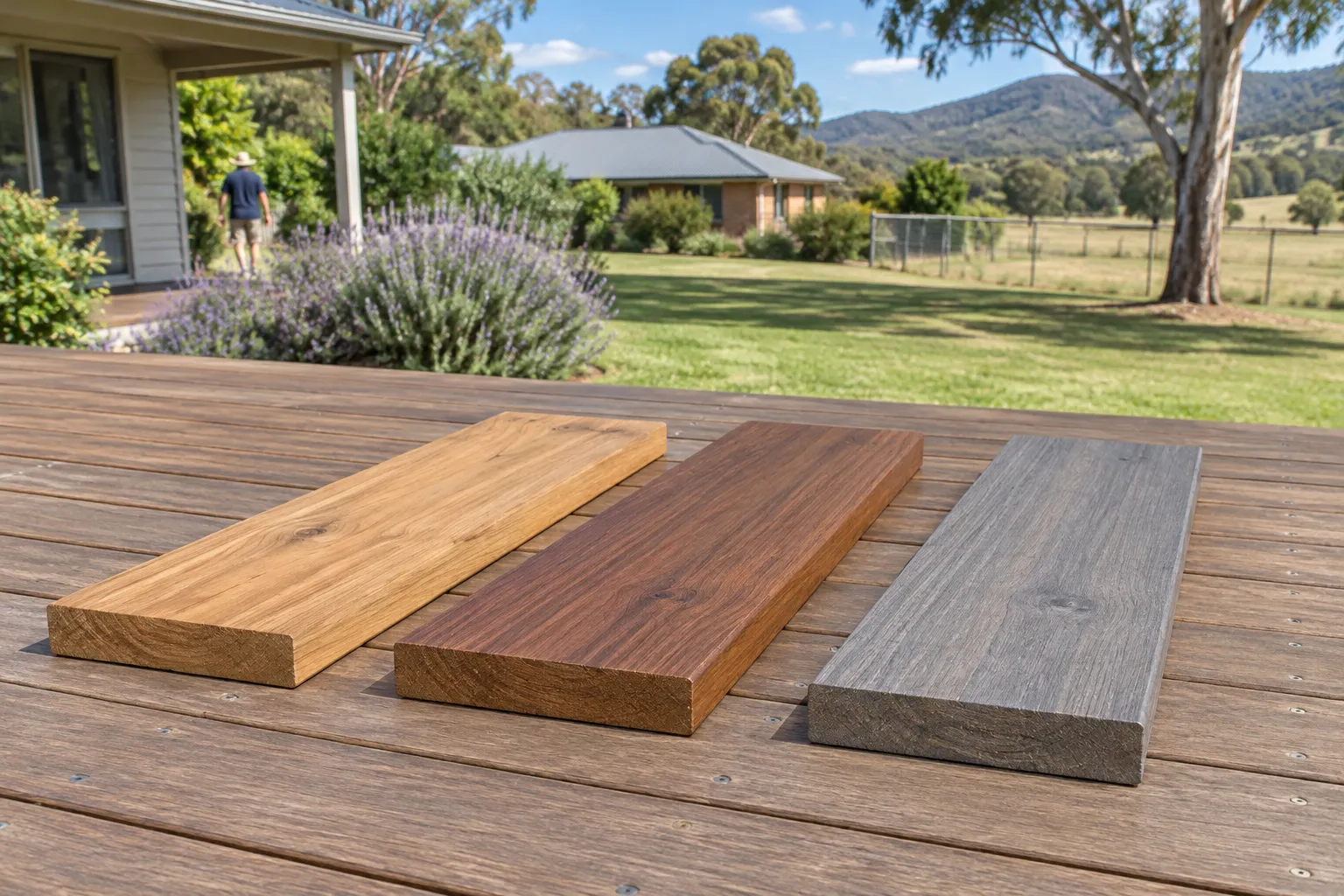
Cabot's sells decking oils and stains in Australia in clear, natural and tinted versions, with colours that typically run from natural and merbau-style red-browns through browns to greys and darker tones. The exact colours and names change over time, so check the current colour chart at a stockist. As with any stain, the result depends on the timber underneath: the same tint looks different on merbau, spotted gum and treated pine. For oil versus stain and costs, see our main deck oiling, staining and restoration page.
What does Cabot's decking range include?
Cabot's decking range includes natural decking oils, tinted oils and deck stains, in both oil-based and water-based formulas. Natural oils enhance the timber's own colour. Tinted oils add colour while still soaking in. Deck stains carry more pigment for stronger colour. Product names and colours change, so use the current range information when choosing.
| Product type | What it does |
|---|---|
| Natural decking oil | Enhances the timber, little added colour |
| Tinted decking oil | Adds a tint, soaks in, easy to recoat |
| Deck stain | Stronger colour, may form more of a surface layer |
| Water-based versions | Faster drying, water clean-up |
Cabot's lists a recoat time of 6 hours at 25 degrees and 50% humidity for its natural decking oil, longer in cooler or more humid weather.
Which Cabot's colours suit merbau?
For merbau, a merbau-style or red-brown tint keeps the classic colour and evens out new and older boards. Browns and darker tones also suit merbau. Grey and pale colours usually look muddy over merbau's dark red base, because stain can't make a dark timber paler. Let new merbau weather for about 6 to 12 weeks before the first coat.
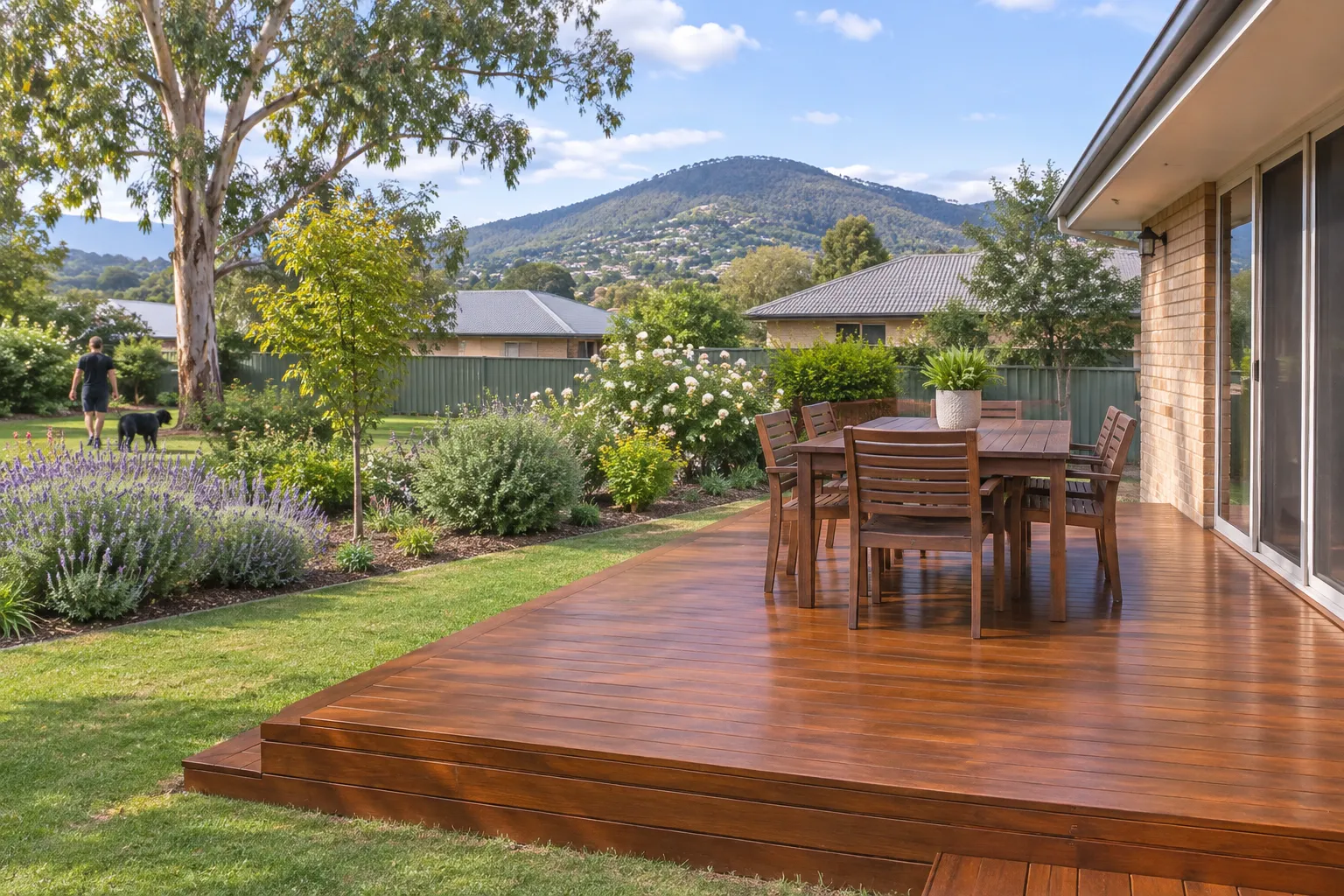
See oiling a merbau deck for merbau timing.
Which Cabot's colours suit spotted gum and pine?
Spotted gum suits natural or light tints, which show off its varied colours or even them out slightly. Treated pine takes almost any colour, and a tint also hides the green tinge left by treatment. Pale hardwoods like blackbutt can go natural to stay light, or grey for a modern look.
What about grey deck stain colours?
Grey stains give a modern or naturally weathered look and suit pale timbers like treated pine and blackbutt best, where the grey shows cleanly. Over red timbers like merbau, grey tends to look muddy. Lighter greys stay cooler underfoot in Albury's sun than charcoal. Test a grey on an offcut of your actual timber before committing.
How do you choose between Cabot's colours?
Start with your timber, then the sun, then the house. Rule out colours that don't suit the timber's base colour. On a deck in full afternoon sun, lean toward lighter tones. Then match the deck to the brick, cladding and roof. Finally, test two or three tints on an offcut and look at them dry, outdoors, in daylight.
For general colour advice, see stain deck colours.
How do you get an even colour with a tinted oil?
Prepare well and apply evenly. Clean the deck, let it dry for two or three fine days, sand any rough or patchy areas, and stir the tin often so the tint stays mixed. Apply thin coats along the grain, two or three boards at a time from end to end, and wipe off excess. Patchiness usually comes from uneven preparation or thick coats.
See how to oil a deck and why is my deck sticky after oiling.
Questions people ask
Where can you see Cabot's deck stain colours?
Hardware stores and paint retailers that stock Cabot's usually have printed colour charts and sometimes sample boards, and the brand publishes its current range. Colours on a chart or screen won't look exactly like your deck. Buy a small tin, test it on an offcut of your timber and look at it dry in daylight.
Do Cabot's stains need two coats?
Most decking oils and stains, including Cabot's, are designed for two coats on bare or weathered timber, with the first soaking in and the second evening the colour. Recoats on a well-maintained deck may need only one. Follow the directions on the tin for coverage and recoat times.
Can you mix Cabot's tints?
Mixing different products or tints yourself isn't usually recommended, because results are unpredictable and may not match on a later recoat. If you want an in-between colour, ask the retailer whether a custom tint is available, and record the exact product and tint so you can match it next time.
Is Cabot's oil-based or water-based?
Cabot's makes both oil-based and water-based decking products. Oil-based versions generally penetrate deeper and enrich colour. Water-based versions dry faster and clean up with water. Check the label of the specific product, because preparation, recoat times and clean-up differ between them.
For the wider picture, start with the deck builder guide for Albury.
Where these facts come from
- Cabot's Natural Decking Oil, product data sheet (recoat times at 25C and 50% humidity)
Updated