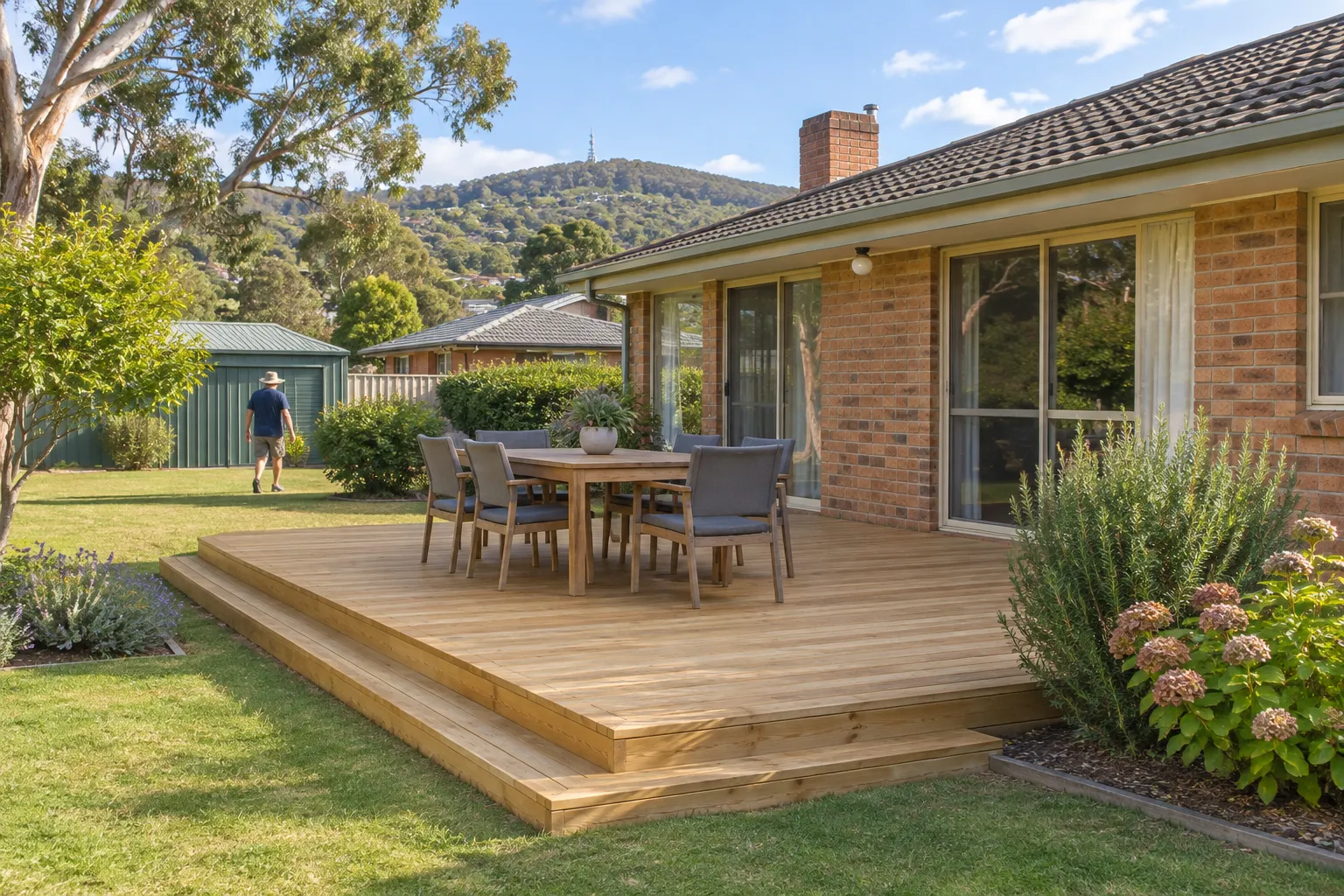
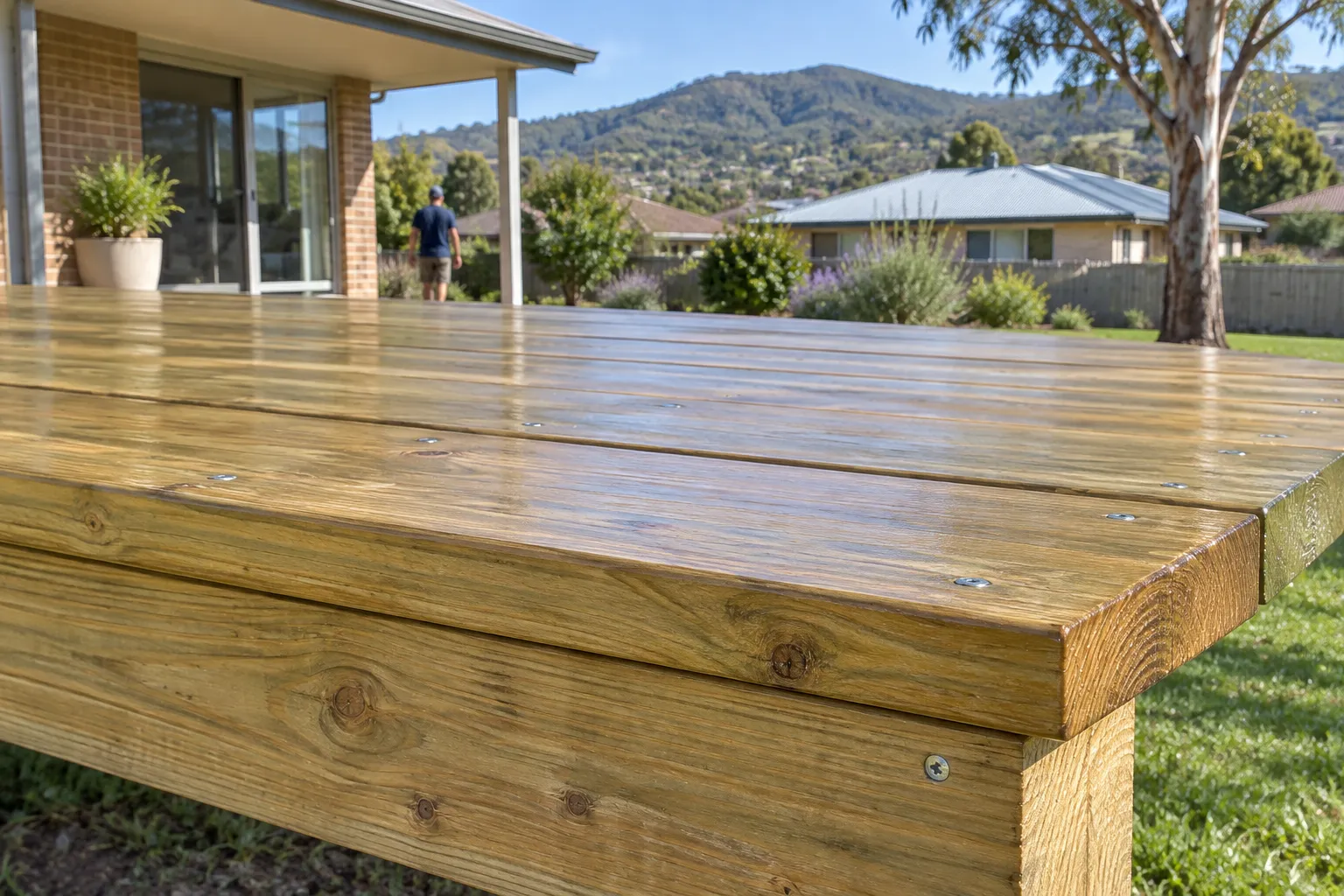
For most treated pine decks, a tinted penetrating oil or a semi-transparent stain is the best finish: it adds colour, hides the green tinge from treatment, gives UV protection and is simple to recoat every 12 to 24 months. Clear oil protects but lets the pine grey faster. Solid stain and paint give strong colour but peel, and stripping them later is costly. Whatever you choose, treated pine needs some finish to slow cracking in Albury's sun. For pine hazard classes, sizes and costs, see our main treated pine decking page.
Why does treated pine need a finish?
The preservative protects treated pine from rot and termites, but not from the sun and the wet-dry cycle. Without a finish, the surface dries, greys and checks with fine cracks, and boards can cup, split and splinter. A finish slows water absorption and UV damage, keeping the boards smoother and longer lasting.
How do the finishes compare on treated pine?
The main choice is between penetrating finishes, which soak in, and film-forming finishes, which sit on top. Penetrating finishes fade evenly and recoat easily. Film finishes last longer between coats but peel when they fail. On a soft, absorbent timber like pine, penetrating finishes are usually the easier long-term choice.
| Finish | Look | UV protection | Recoat | Peels? |
|---|---|---|---|---|
| Clear oil | Natural, green tinge shows | Low | Clean and re-oil | No |
| Tinted oil | Coloured, grain shows | Moderate | Clean and re-oil | No |
| Semi-transparent stain | More colour, grain shows | Good | Clean and recoat | Rarely |
| Solid stain | Opaque | High | Sand when it fails | Yes |
| Paint | Opaque | High | Sand or strip | Yes |
Which finish lasts longest on treated pine?
Solid stains and paints usually last longest between coats, because the film shields the timber. But they crack and peel eventually, and the deck then needs sanding or stripping back, which published guides put at about $55 to $95 a square metre professionally. Tinted oils need recoating more often, about every 12 to 24 months, but a recoat is quick and cheaper.
Is paint a good finish for treated pine decking?
Paint can work on treated pine, which takes paint better than oily hardwoods, but it's usually not the best finish for a deck floor. Foot traffic wears paint, it can trap water if it cracks, and it peels in patches that need sanding. If you want a solid colour, a solid deck stain made for floors handles wear better. See painting decking timber.
What should you do before finishing treated pine?
Let the pine dry if it arrived wet from treatment, often a few weeks, and check with the water test. Clean the deck, rinse and let it dry. Seal all cut ends with an end-seal product to protect the untreated core. Lightly sand raised grain. Then apply the finish in thin coats along the grain, following the label.
See treated pine decking stain for the steps.
How often should treated pine be refinished?
With a tinted oil or semi-transparent stain, about every 12 to 24 months in Albury, sooner on decks in full sun and later on covered decks. Solid stains and paint last longer but need full preparation when they fail. Doing a light maintenance coat on high-traffic paths between full recoats keeps the deck looking even.
For the method, see how to oil a deck.
Questions people ask
What is the best oil for treated pine decking?
A tinted penetrating decking oil is a good choice for treated pine, because it adds colour, hides the green tinge and gives better UV protection than a clear oil. Oil-based products give richer colour. Water-based products dry faster. Follow the label's directions for new treated timber and recoat times.
Should you seal treated pine decking?
Yes, treated pine decking should have a finish such as an oil or stain to slow water absorption, cracking and greying. The treatment protects against rot and insects, not weathering. Also seal every cut end with an end-seal product, because cutting exposes untreated timber that the surface finish alone won't protect.
Can you put decking oil on wet treated pine?
No. Oil can't soak into wet timber, so it sits on the surface, stays sticky and wears off quickly. Let treated pine dry first. Boards that arrived wet from treatment can take a few weeks. Use the water test: if a sprinkle of water soaks in quickly, the timber's ready.
Does a finish stop treated pine splintering?
It helps a lot. Keeping pine oiled or stained stops the surface drying out and checking, which is what causes most splinters. Sanding rough spots before recoating keeps it smooth. A finish won't fix boards that are already badly cracked or rotten, which need replacing.
The rest of our guides start from deck builder albury.
Where these facts come from
- WoodSolutions, preservative treatments and use classes
- Published deck oiling and staining prices from Australian cost guides, checked November 2026
Updated