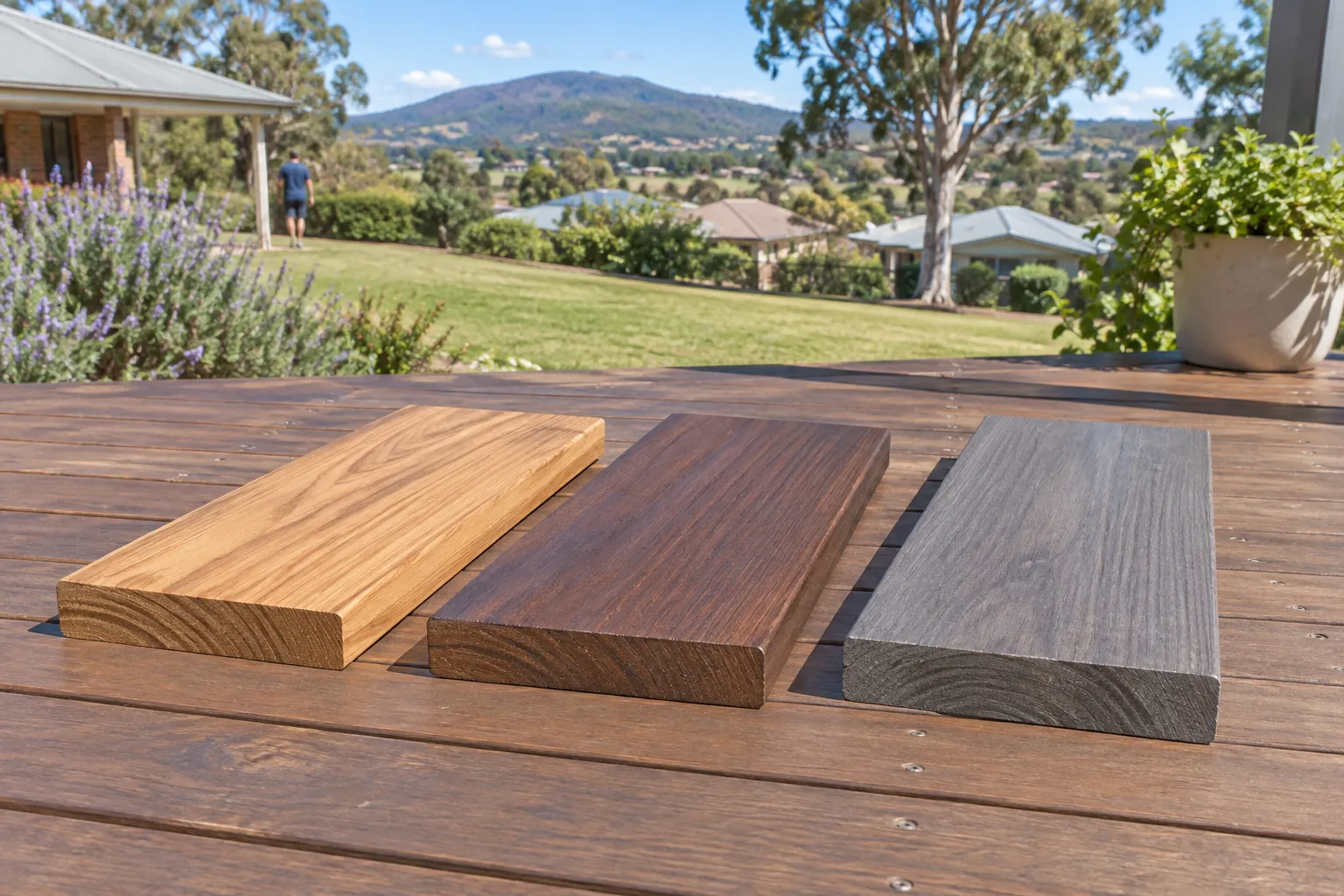
Yes, you can stain treated pine decking, and it's one of the easiest timbers to stain because it's pale and absorbent. Wait until the pine is dry after building, often a few weeks for boards that arrived wet from treatment, then clean it, let it dry, and apply thin coats of a tinted decking oil or a semi-transparent stain along the grain. A tint also hides the greenish colour some treatments leave. In Albury's sun, recoat every 12 to 24 months. For oil, stain and costs in general, see our main deck oiling, staining and restoration page.
When can you stain new treated pine?
Stain new treated pine once it's dry. Boards that come from the yard still wet from treatment need time to dry out, often a few weeks in good weather, while kiln-dried boards can be finished sooner. A simple test: sprinkle water on a board. If it soaks in quickly, it's dry enough. If it beads or sits on the surface, wait. Check the stain maker's advice too.
Why does treated pine look green?
Many modern treatments for H3 and H4 pine are copper based, which gives the timber a greenish tint. The colour fades over time in sun. A tinted stain or oil covers it straight away. Brown, merbau and grey tints are popular choices. The tint doesn't affect the treatment's protection.
Which stain suits treated pine?
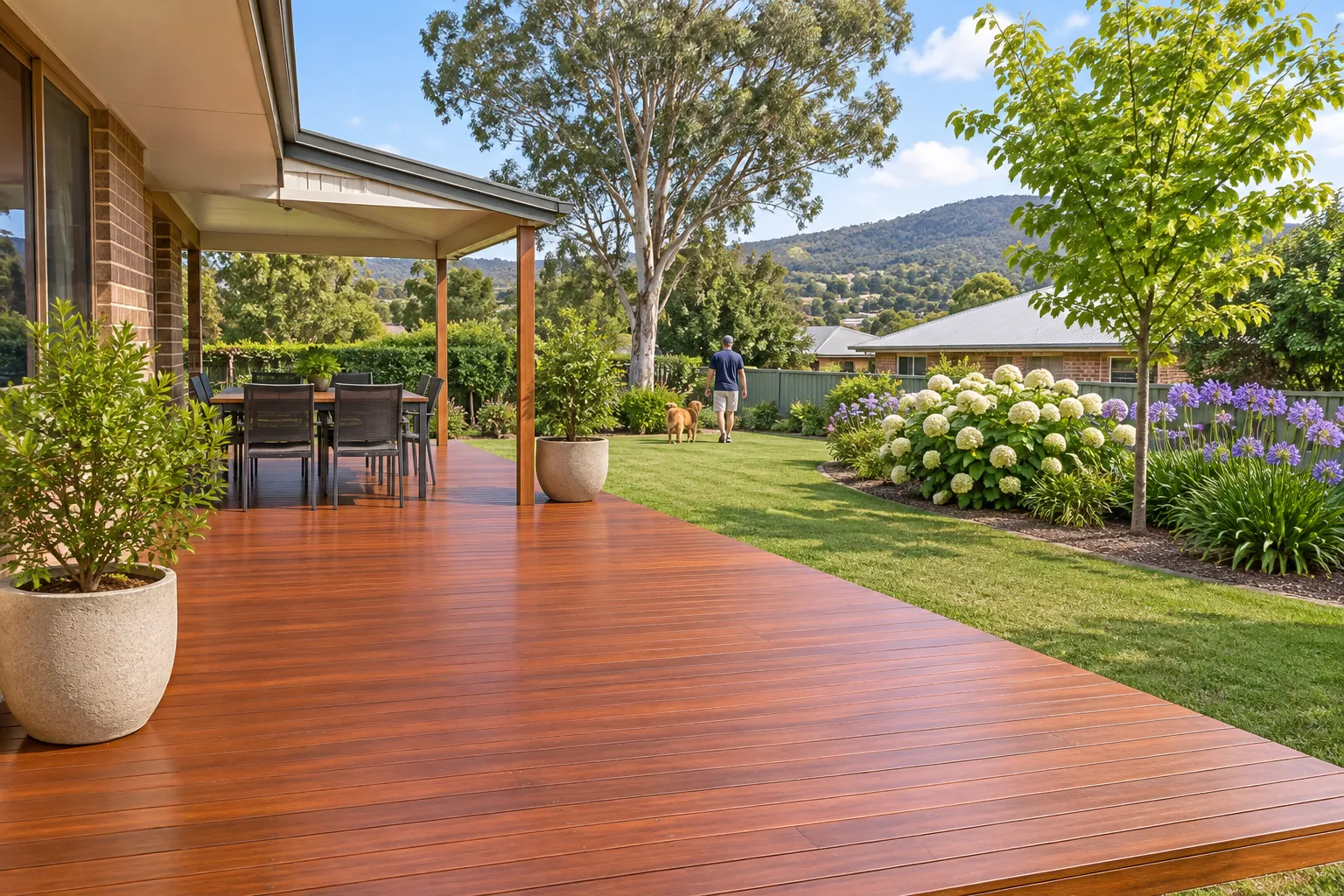
Tinted penetrating oils and semi-transparent stains suit treated pine well, adding colour while soaking in, so they're easy to recoat. Solid stains give strong colour and hide knots, but peel when they fail and need sanding. Clear oils protect but let the green tinge show and grey faster. Because pine is pale, it takes almost any colour.
| Finish | On treated pine |
|---|---|
| Tinted oil | Adds colour, hides green tinge, easy recoat |
| Semi-transparent stain | Stronger colour, grain shows |
| Solid stain | Hides knots and grain, peels later |
| Clear oil | Protects, green tinge shows, greys faster |
See best finish for treated pine decking for more.
How do you stain treated pine decking?
Clean the deck with a timber deck cleaner, rinse it and let it dry for two or three fine days. Lightly sand any rough or raised grain. Stir the stain well, then apply a thin coat along two or three boards at a time, end to end, and wipe off any excess. Let it dry before a second coat. Seal any fresh cut ends with an end-seal product before staining.
The steps:
- Check it's dry with the water test.
- Clean and rinse, then let it dry.
- Seal cut ends to protect the treatment.
- Test the colour on an offcut.
- Apply thin coats along the grain, wiping excess.
- Second coat after the recoat time on the label.
Does staining affect the treatment?
No. Staining doesn't remove or reduce the preservative treatment. What does matter is sealing cut ends, because cutting exposes untreated timber inside the board. An end-seal product brushed on every cut keeps the protection intact. Use fixings rated for treated timber, because copper-based treatments can corrode plain steel.
How often does stained treated pine need recoating?
Usually every 12 to 24 months in Albury's sun, sooner on west- and north-facing decks, and later on covered decks. Treated pine is softer and more absorbent than hardwood, so it can wear and weather faster without regular recoats. When the colour fades and water soaks straight in, it's time.
For the full cleaning and recoating method, see how to oil a deck and staining timber decking.
What colours suit treated pine?
Treated pine takes almost any colour because it's pale. Merbau and brown tints give a classic hardwood look. Greys suit modern homes and hide the green tinge well. Darker tones look bold but get hotter in the sun. Test the colour on an offcut, because pine's absorbency can make tints come out darker than the chart.
See stain deck colours for help choosing.
Questions people ask
Can you stain treated pine straight away?
Only if it's dry. Treated pine that's still wet from treatment won't absorb stain properly, which can leave a patchy, sticky finish. Kiln-dried boards can often be stained soon after building. For wet boards, wait a few weeks for them to dry out, and use the water test to check.
What is the best stain for treated pine decking?
A tinted penetrating decking oil or a semi-transparent stain usually suits treated pine best, because it adds colour, hides the green tinge and is easy to recoat. Choose oil-based for richer colour or water-based for faster drying. Follow the product's directions for new treated timber.
How do you stop treated pine decking from cracking?
Keep it oiled or stained, because a dry surface cracks in sun. Recoat every 12 to 24 months in Albury, use the right gaps so boards can move, seal cut ends, and make sure the deck has airflow underneath. Narrower boards crack and cup less than wide ones.
Should treated pine be sealed or stained?
Treated pine benefits from a finish, either a clear oil or a tinted stain, to slow weathering and cracking. A tinted finish adds UV protection and hides the green tinge. Clear finishes protect against water but let the timber grey faster. Most owners around Albury choose a tinted oil or stain.
This guide is one of many on deck builder across Albury.
Where these facts come from
- WoodSolutions, preservative treatments and use classes
- Cabot's Natural Decking Oil, product data sheet
Updated