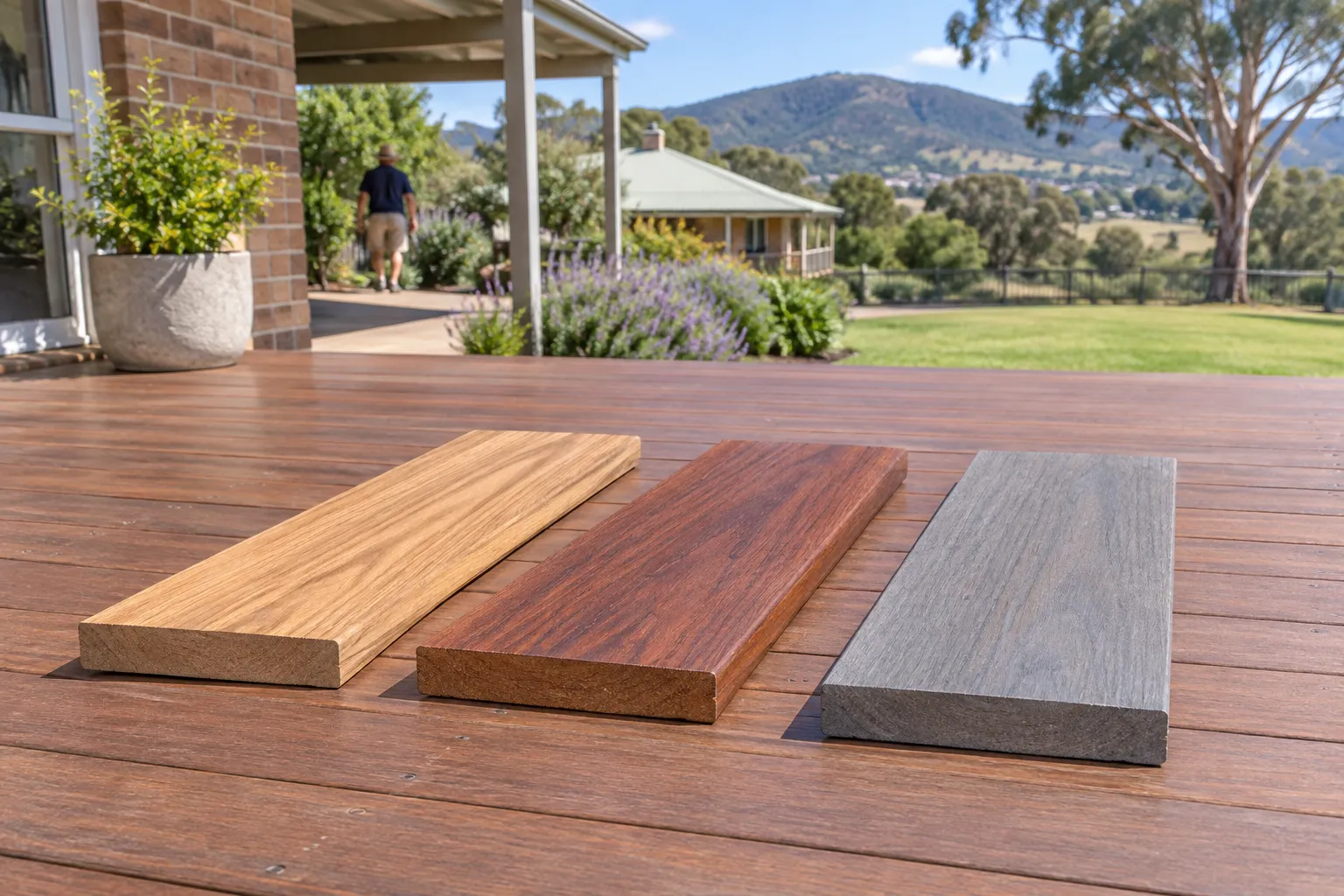
Deck oil is a penetrating finish that soaks into the timber, enriches its colour and slows water and sun damage, and it's recoated simply by cleaning and re-oiling. Deck stain adds more colour: semi-transparent stains still show the grain, while solid or film-forming stains sit on top, hide the grain and last longer, but peel when they fail and must be sanded off. For most hardwood decks around Albury, a penetrating or tinted oil is the easiest finish to live with. For timing and costs, see our main deck oiling, staining and restoration page.
What's the difference between deck oil and deck stain?
The main difference is where the finish sits. Oil soaks into the wood and leaves the grain and texture showing. Stain carries pigment, from a light tint to a solid colour, and the heavier stains form a layer on the surface. That changes how they look, how long they last and how you recoat them.
| Deck oil | Semi-transparent stain | Solid or film stain | |
|---|---|---|---|
| Where it sits | In the timber | Mostly in the timber | On the surface |
| Look | Natural, enhances grain | Coloured, grain shows | Solid colour, grain hidden |
| Wear | Fades gradually | Fades gradually | Cracks and peels |
| Recoating | Clean and re-oil | Clean and recoat | Sand or strip first |
| Typical recoat in Albury | 12 to 24 months | 12 to 24 months | Longer, until it fails |
Which lasts longer: oil or stain?
Solid and film-forming stains usually last longer between coats than oils, because the pigment and film shield the timber. But when they fail, they crack and peel, and the deck has to be sanded or stripped before recoating, which costs more. Oils and semi-transparent stains fade more evenly and can simply be recoated. Over the life of a deck, oil often costs less to maintain.
Which is better for merbau and spotted gum?
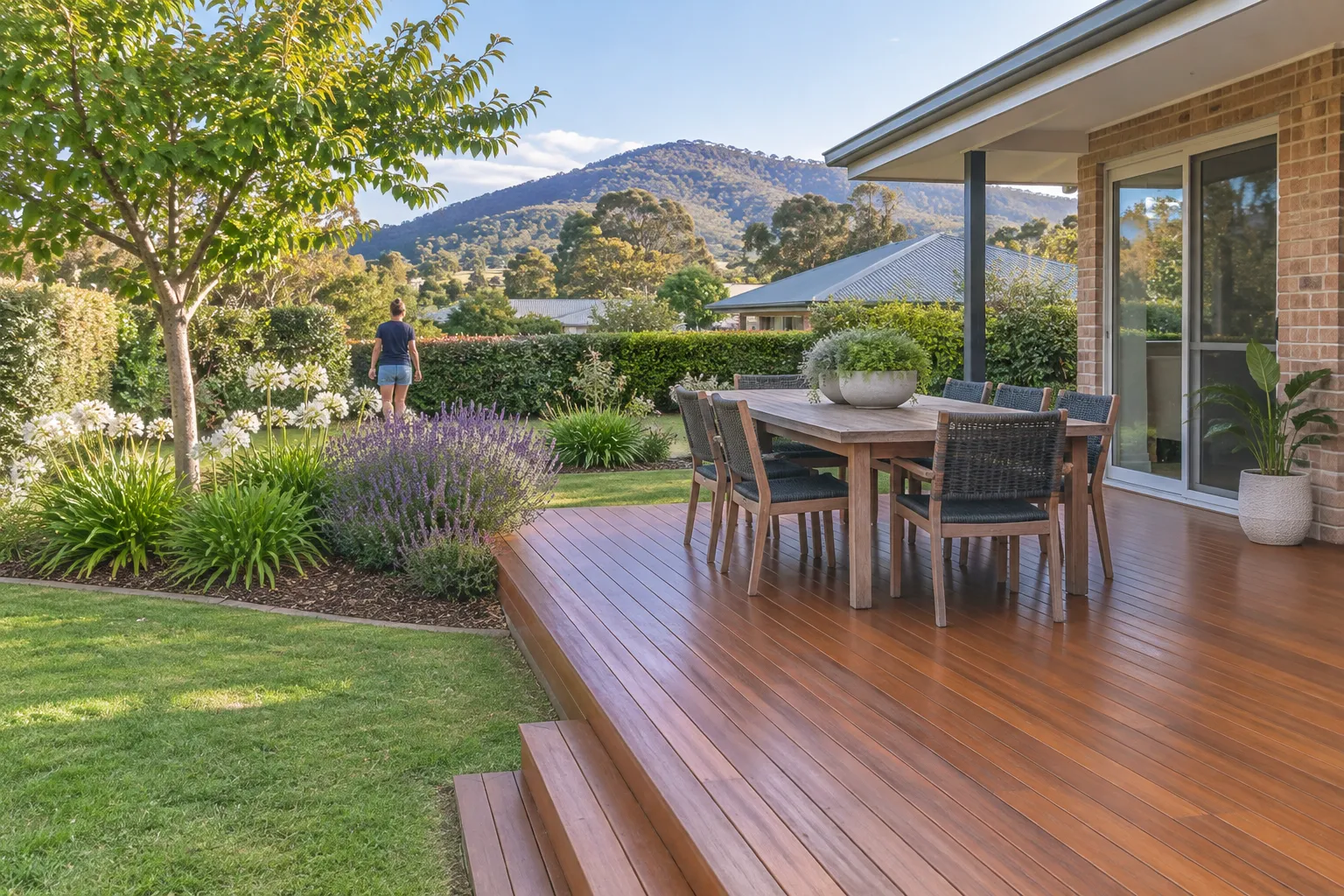
For dense hardwoods like merbau and spotted gum, a penetrating oil or a tinted oil is usually the better choice. These timbers are naturally oily and dense, so film-forming stains can struggle to bond and are more likely to peel. A merbau-tinted oil evens out merbau's colour, and a natural or light tint shows off spotted gum.
See best decking oil for merbau and stain merbau decking.
Which is better for treated pine?
Treated pine takes both oils and stains well, and because it's pale and soft, stains are popular for adding colour. A tinted oil or semi-transparent stain gives colour while staying easy to maintain. A solid stain can hide pine's knots and green tinge from treatment, but will need sanding when it peels. See treated pine decking stain.
Oil-based or water-based: does it matter?
Both oils and stains come in oil-based and water-based versions. Oil-based products usually penetrate deeper and enrich the colour, but take longer to dry. Water-based products dry faster, smell less and clean up with water, and some tolerate light rain on the day, such as Intergrain's UltraDeck. Follow the label for the product you choose.
How do you oil-stain a deck?
Oil-staining means using a tinted penetrating oil or a semi-transparent stain. Clean the deck, let it dry for two or three fine days, sand rough patches, then apply thin coats along the grain, two or three boards at a time, wiping off excess. Let it dry before the second coat. Cabot's lists a 6 hour recoat time at 25 degrees and 50% humidity for its natural oil.
See how to oil a deck for the full method, and staining timber decking for stain specifics.
What do oiling and staining cost?
Published NSW guides put a professional clean and re-oil or re-stain at about $15 to $35 a square metre on a deck in good condition, and about $35 to $70 with sanding. Stripping a failed film stain costs more, about $55 to $95 a square metre. That stripping cost is the main reason many owners avoid solid stains on decks. See deck restoration cost.
Questions people ask
Should I oil or stain my deck?
For most hardwood decks, oil is the easier choice: it looks natural, fades evenly and is simple to recoat. Choose a stain if you want a stronger or different colour, especially on pale timber like treated pine. Avoid solid film stains unless you're happy to sand the deck back when they eventually peel.
Can you stain over decking oil?
Usually you can apply a tinted oil or a compatible semi-transparent stain over a weathered penetrating oil, after a thorough clean. Applying a film-forming stain over oil often fails, because it can't bond to the oily surface. Check both products' labels, and sand back to bare timber if you're changing from oil to a film stain.
Is stain more durable than oil?
Film-forming stains are usually more durable between coats than oils, because they shield the surface. But they're less forgiving when they fail, because they peel and need sanding. Oils need recoating more often, but recoating is quicker and cheaper. Which is more practical depends on how much upkeep you want to do.
Does stain protect a deck better than oil?
Pigmented finishes, including tinted oils and stains, give more UV protection than clear oils, because the pigment blocks sunlight. Solid stains protect most, until they crack. Clear oils protect against water but let more sun through, so the timber greys faster. A tinted penetrating oil is a good middle ground for Albury's sun.
The rest of our guides start from deck builder across Albury.
Where these facts come from
- Cabot's Natural Decking Oil, product data sheet
- Intergrain UltraDeck Timber Oil, product data sheet
- Published deck oiling and staining prices from Australian cost guides, checked November 2026
Updated