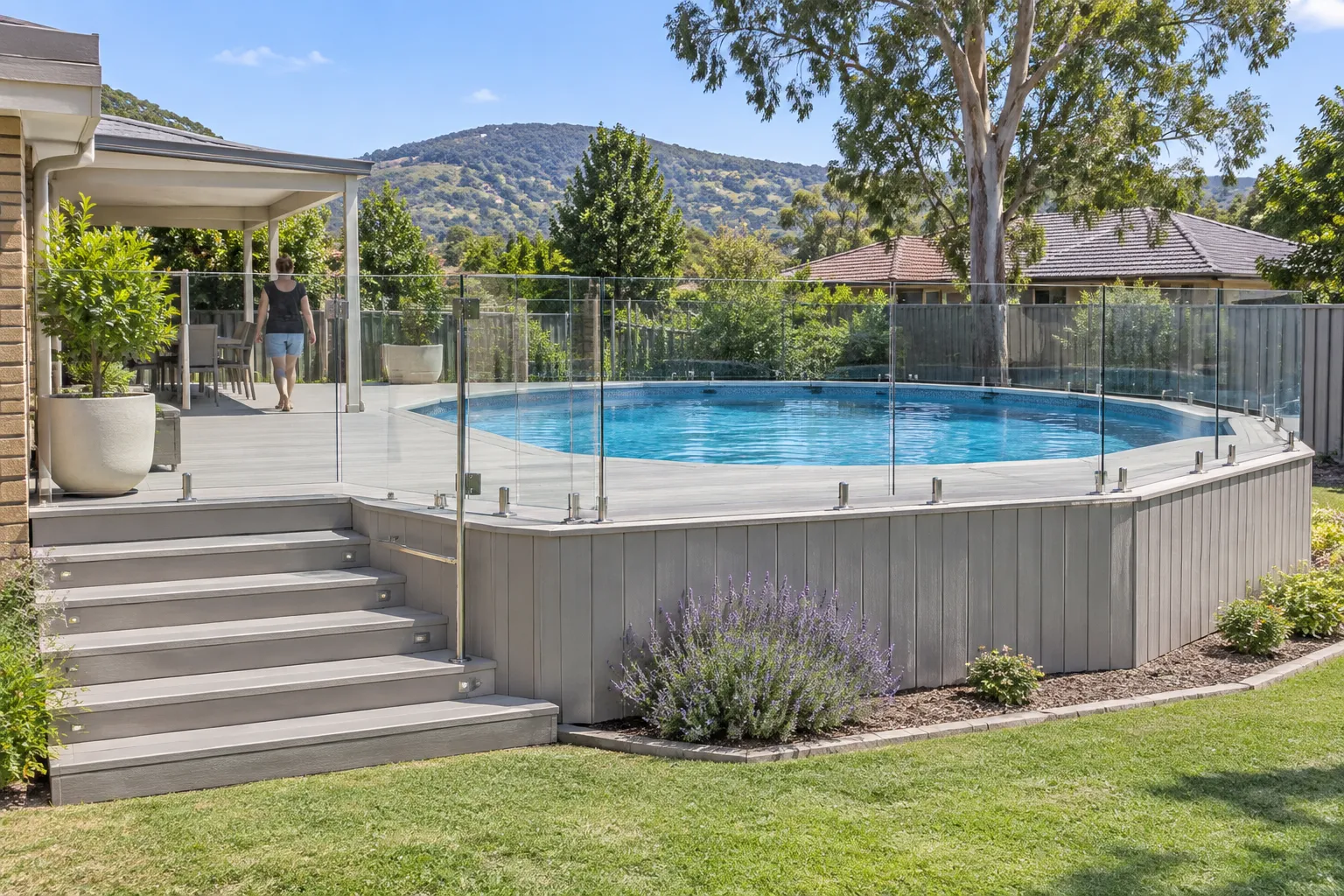
Composite pool decking is composite boards used around or beside a swimming pool. It's popular because the boards don't splinter, rot or need oiling, even with constant splashing and sun. The two things to get right are heat and grip: a light-coloured, capped board with a textured surface stays cooler and less slippery. The deck must also keep the pool barrier compliant. For materials, decks for above-ground pools and the fence rules in more detail, see our main pool decks page.
Is composite good around a pool?
Yes, composite suits pools well. Capped boards resist water, chlorine splashes and stains, they don't splinter under bare feet, and they don't need oiling. Pale hardwood is a good alternative and stays cool, but needs oiling often near water. Merbau's tannin can stain pool surrounds. Composite's main drawback is heat in dark colours.
| Composite (light, capped) | Pale hardwood | Treated pine | |
|---|---|---|---|
| Splinters | No | Possible if neglected | Yes, over time |
| Upkeep near water | Wash | Oil often | Oil often |
| Heat | Warm in sun | Cooler | Moderate |
| Stains on surrounds | No | Low | Low |
Which composite colour is best for a pool deck?
Light colours usually suit a pool deck best, because they stay cooler underfoot and show less of the white marks that dried pool water can leave. In Albury's summer, a dark charcoal deck in full sun can be too hot to walk on barefoot. Pale greys, sand and light timber tones are the usual choices. Shade over part of the deck helps too.
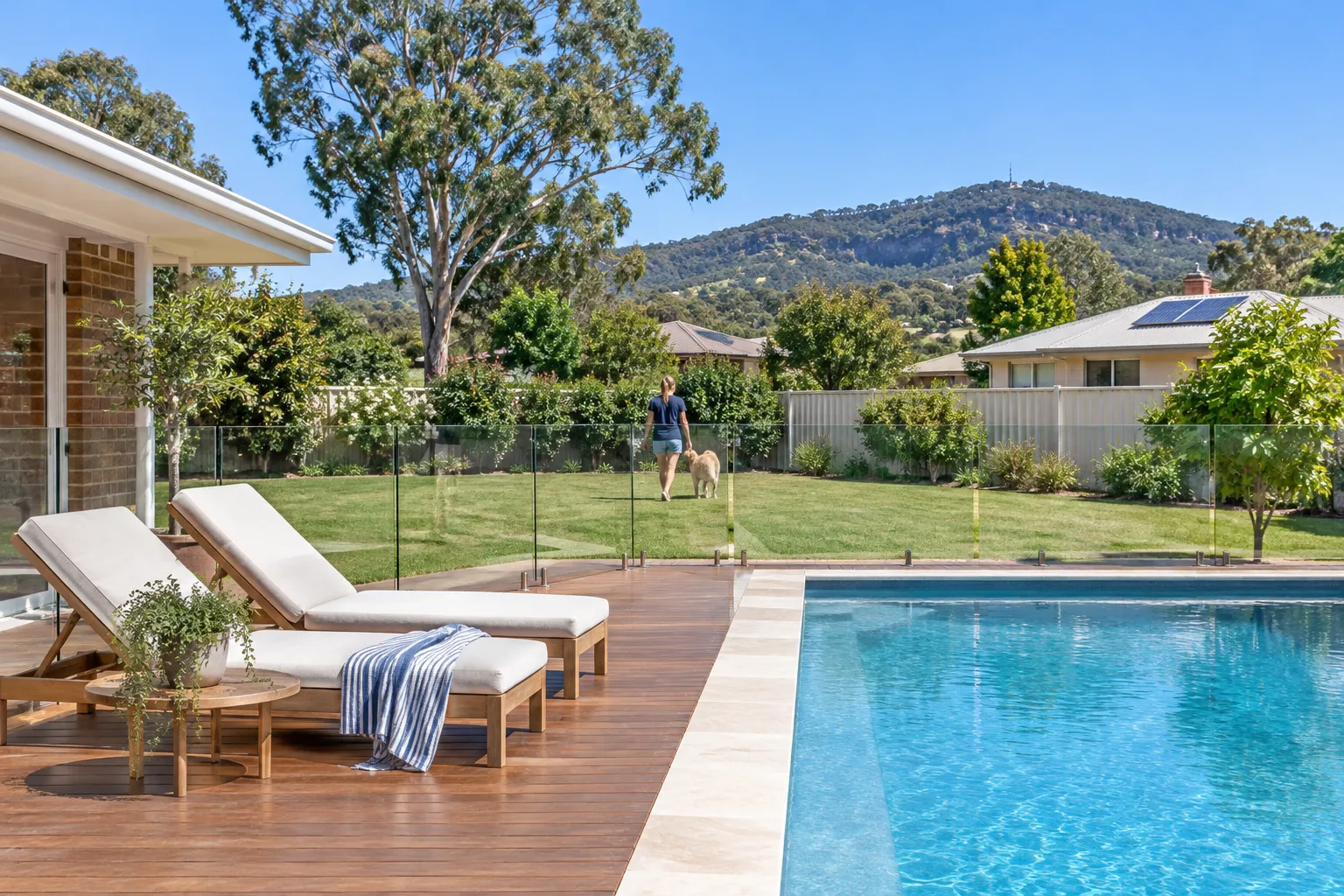
Test samples by leaving them in full sun on a hot afternoon, then walking on them barefoot. See Ekodeck colours for more on colour choice.
Is composite slippery around a pool?
Most capped composite boards have a textured, grain-embossed surface that grips reasonably well when wet, but any surface can get slippery with algae, sunscreen or soap. Choose a board the maker recommends for wet areas, run the boards across the main walking direction if that suits the layout, and wash the deck regularly. Step edges benefit from a contrasting nosing.
Does chlorine or salt damage composite decking?
Normal splashing from a chlorinated or salt pool doesn't usually harm capped composite boards, but dried salt and pool chemicals can leave white residue. Rinse the deck with fresh water regularly, especially near the pool edge and steps. Store pool chemicals off the deck, because concentrated chemicals can mark it. Check the board maker's care guide for specifics.
What are the pool fence rules for a composite pool deck?
The same pool barrier rules apply whatever the board. In NSW, the pool barrier must keep a non-climbable zone, and the NSW Government says objects such as furniture, pot plants and ladders mustn't be within 90 centimetres of the fence. A deck, step or built-in bench near the fence can make it climbable. On raised decks, the deck edge and its balustrade are often part of the pool barrier.
Plan the deck and the barrier together, and have the barrier checked when the deck is done. In Victoria, the VBA sets similar barrier rules, and pools must be registered with the council.
How much does a composite pool deck cost?
A composite pool deck costs about the same per square metre as any composite deck, about $280 to $700 installed for standard boards in published guides, plus pool-specific extras like cutting around coping, raised frames for above-ground pools, steps and fence changes. See pool decks cost for totals by pool type and size.
How do you look after a composite pool deck?
Rinse it with fresh water often, especially in summer, to stop chlorine or salt residue building up. Wash it with soapy water and a soft brush each season, keep the gaps clear so water drains, and scrub off any algae in shady spots. Don't leave pool chemicals or wet towels sitting on it. See cleaning composite decking.
For timber options, see pool timber decking.
Questions people ask
What is the best decking around a pool?
For most pools around Albury, a light-coloured capped composite or a pale hardwood like spotted gum or blackbutt works well. Composite needs less upkeep near water. Pale hardwood stays cooler and looks natural but needs oiling more often. Pavers or travertine stay coolest but only suit in-ground pools at ground level.
Does composite pool decking get too hot?
Dark composite boards in full summer sun can get uncomfortably hot for bare feet. Light colours, boards with heat-reflective caps, and shade from a pergola, umbrella or sail make a big difference. Test samples in the sun before choosing, especially if children will use the deck barefoot.
Can composite decking go right to the pool edge?
It can sit close to the pool edge or coping, with a small gap for drainage and movement. The frame must stay clear of the pool shell, and the deck shouldn't put load on the pool wall. A builder sets the edge detail to suit your pool type and coping. Around in-ground pools, the deck often meets pavers.
Do you need a special composite board for pools?
Not always a special board, but choose one the maker approves for wet areas, with a capped, textured surface. Check the care guide for chlorine and salt water. Lighter colours and good grip matter more than the brand. If in doubt, ask the supplier which of their ranges they recommend around pools.
This guide is one of many on deck builder across Albury.
Where these facts come from
- NSW Government, owning a pool or spa: your obligations
- NSW Fair Trading, pool fencing requirements
- Published installed composite decking prices from four Australian cost guides, checked November 2026
Updated