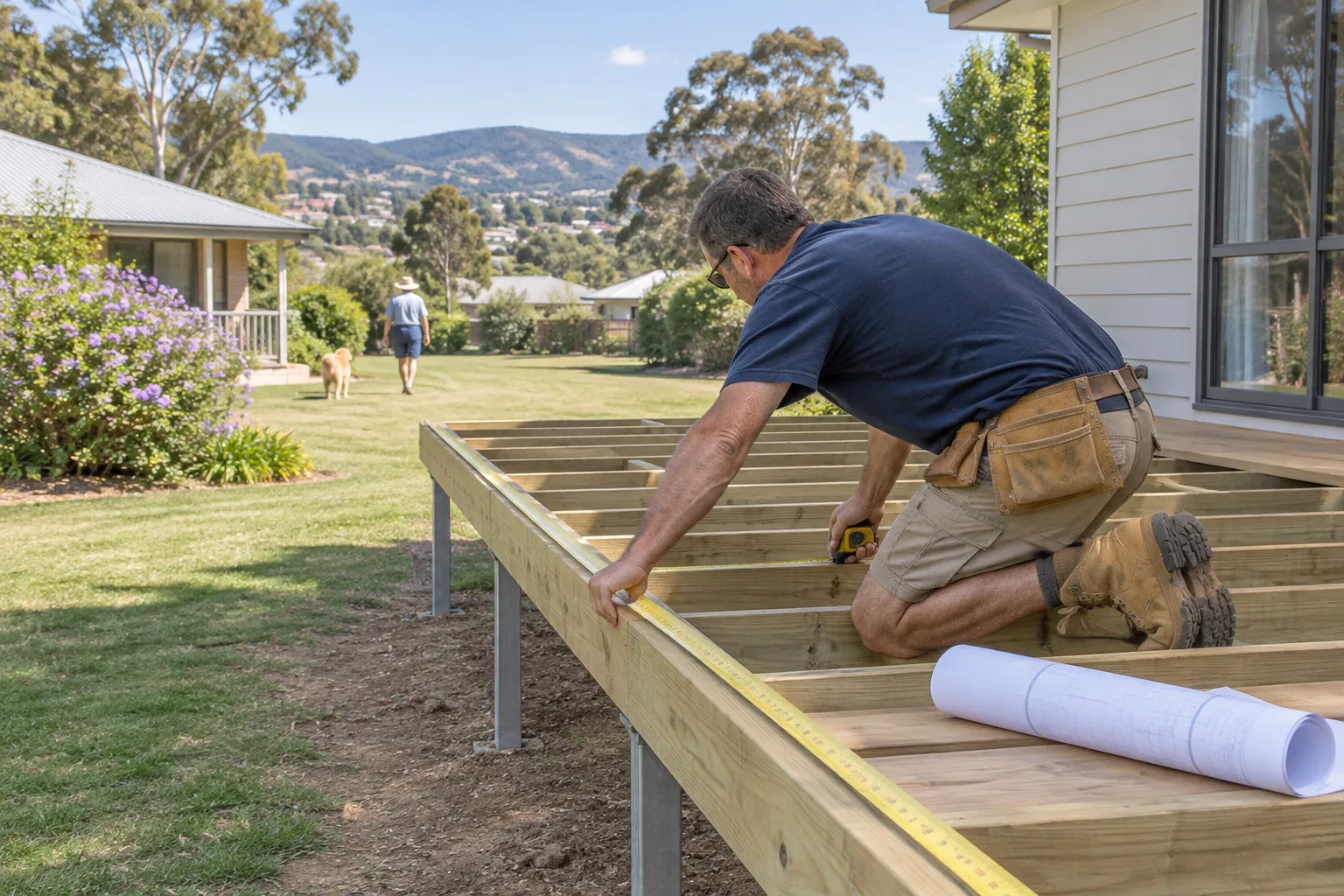
In Albury and the rest of NSW, a deck doesn't need council approval if it meets every standard for exempt development in the state's planning rules: broadly, no bigger than 25 square metres, a floor no more than 1 metre above the ground, no higher than 3 metres overall, and behind the building line. Miss any one and it needs a development application or a complying development certificate. In Wodonga and the rest of Victoria, the Victorian Building Authority says most decks need a building permit. This guide walks through both, with the local extras. For costs and how a quote works, see our deck builder home page.
How big can a deck be without council approval in NSW?
Under the NSW exempt development rules, a single deck, patio, pergola, terrace or verandah can be up to 25 square metres. There's also a cap on all of these structures together on your lot: 15% of the house's ground floor area on lots over 300 square metres, or 25 square metres on smaller lots. The deck floor can't be more than 1 metre above existing ground level.
The main NSW limits for an exempt deck:
| Standard | Limit |
|---|---|
| Area of the deck | Up to 25 m2 |
| Total of all such structures on the lot | 15% of the house's ground floor area (lots over 300 m2), or 25 m2 (lots of 300 m2 or less) |
| Floor height | No more than 1 m above existing ground |
| Overall height | No more than 3 m above existing ground |
| Any enclosing wall | No more than 1.4 m high |
| Location | Behind the building line, set back from boundaries |
The rules have changed over time, including updates in 2024 for small lots, so check the current version on the NSW Planning Portal before you build.
What can you build without council approval in NSW?
Exempt development is minor building work with low impact that can go ahead without planning or building approval, as long as it meets every standard that applies. Decks, patios, pergolas, garden sheds, carports and some fences can all be exempt. The NSW Department of Planning stresses it's all or nothing: if a proposal doesn't meet each and every requirement, it isn't exempt.
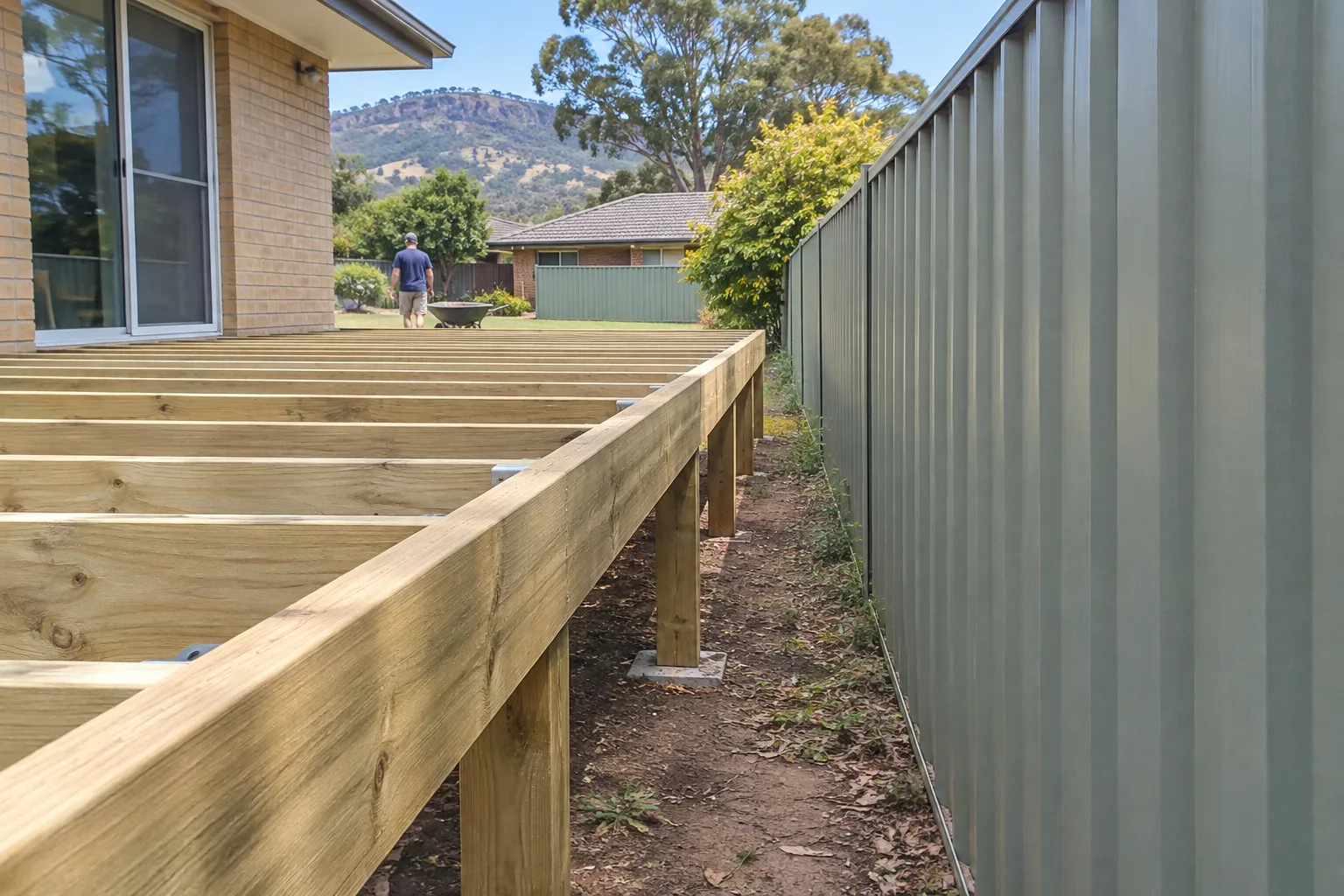
Things that commonly stop a deck being exempt in and around Albury:
- It's too high or too big. Over 1 metre off the ground, or over the area limits.
- It's in front of the house. Exempt decks sit behind the building line.
- Heritage. A heritage item on the lot, or a heritage conservation area, can rule out the exempt path.
- Bushfire. On bush fire prone land, which includes parts of Thurgoona, Splitters Creek and Jindera, extra conditions apply. AlburyCity publishes its bush fire prone land map.
- Flood. Parts of central and South Albury are flood affected, which can change what's allowed.
What if your deck isn't exempt in NSW?
If a deck fails any exempt standard, there are two usual paths. A complying development certificate (CDC) is a fast-track approval from a council or private certifier for work that meets set standards. A development application (DA) goes to the council for full assessment. Which one suits depends on the deck, the lot and any heritage, bushfire or flood constraints.
A builder or certifier can tell you which path your deck needs. Approval fees and timeframes vary, so ask for them to be shown separately in a quote.
Do you need a permit for a deck in Wodonga and Victoria?
Generally, yes. The Victorian Building Authority treats decks as building work, and councils such as Frankston say a building permit is needed regardless of size. The VBA notes some complexity: timber slats laid directly on the ground usually aren't considered a deck, because there's no supporting structure. If in doubt, ask your council or a building surveyor.
How it works on the Victorian side of the Border:
- Building permit. Issued by a registered building surveyor, council or private.
- Planning permit. Sometimes needed as well, for example under a heritage overlay in Beechworth and Yackandandah, or a bushfire overlay in parts of Towong Shire.
- Registered builder. In Victoria, domestic building work over $10,000 must be done by a registered building practitioner.
Which rules apply to every deck, approved or not?
Even an exempt deck must be built properly. The National Construction Code requires a balustrade where a deck is more than 1 metre above the ground below, at least 1 metre high and with openings no wider than 125 millimetres. Stairs must meet the code's rise and going limits. In NSW, residential building work over $5,000 must be done by a licensed builder.
Other rules that still apply:
- Structure. The deck must be structurally sound, built to the relevant standards.
- Drainage. Water mustn't be directed onto a neighbour's land.
- Pools. A deck near a pool mustn't make the pool barrier climbable.
- Easements and services. Don't build over sewers or easements without checking.
How do you check the rules for your own block?
Start with your property's planning information. In NSW, a planning certificate from the council (often called a 10.7 certificate) shows heritage, bushfire, flood and other constraints, and the NSW Planning Portal lets you check the exempt standards. In Victoria, a planning property report shows overlays. A builder can also check this as part of the quote.
A simple order of checks:
- Which state? Albury and Jindera side: NSW rules. Wodonga side: Victorian rules.
- Constraints. Heritage, bushfire, flood, easements.
- The deck. Size, height, location, and every exempt standard (NSW).
- The path. Exempt, CDC or DA in NSW. Building permit, and possibly a planning permit, in Victoria.
For pergolas specifically, see pergola approval. For the building steps, see how to build a deck.
Questions people ask
What happens if you build a deck without approval?
If a deck needed approval and didn't get it, the council can order changes or removal, and it can cause problems with insurance and when you sell, because buyers' solicitors often check. In some cases, councils can issue a building information certificate for existing unapproved work in NSW. It's usually simpler and cheaper to check before building.
Can you build a deck right up to the fence?
Usually not as exempt development in NSW. Exempt decks must be set back from the boundaries, and they can't rely on the fence for support. A deck closer to the boundary generally needs approval. In Victoria, siting rules in the building regulations apply, and the building surveyor checks them. Talk to your neighbour if the deck will overlook their yard.
Do you need approval to replace an old deck?
Often you do need to check, because the rules may have changed since the old deck was built, and it may never have been approved. If the new deck meets every current NSW exempt standard, it can be exempt. In Victoria, a building permit is usually needed. See do you need a permit to repair a deck.
Who arranges approval, you or the builder?
Either. Many builders arrange the approval as part of the job, using a private certifier or building surveyor, and include the cost in the quote. You can also apply yourself. Either way, check the quote says who's responsible, and make sure approval is in place before work starts.
Where these facts come from
Updated