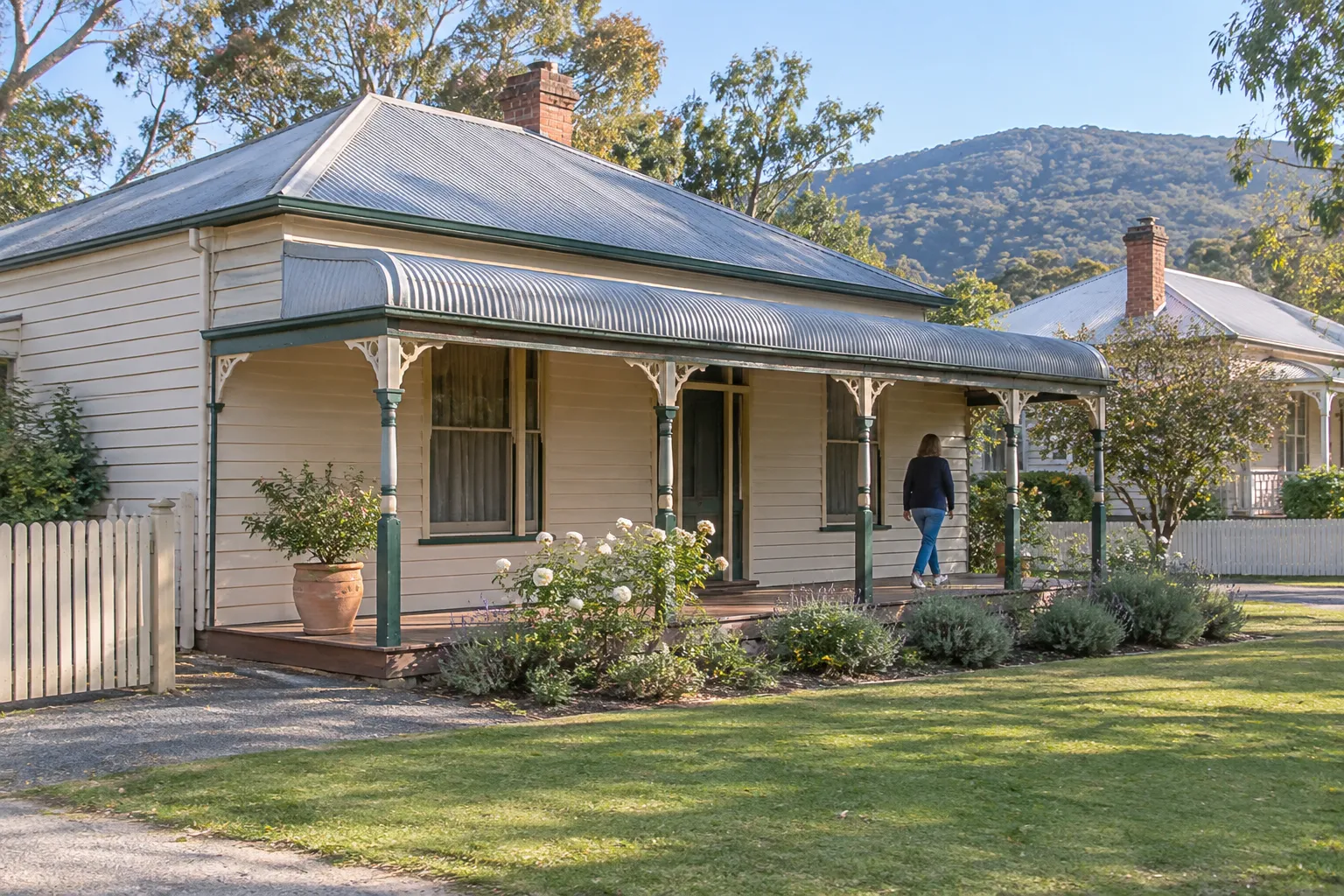
A verandah is a roofed, open-sided structure attached to the house, often along the front or side, that keeps sun and rain off the walls, windows and the space beside them. A pergola is a frame of posts and beams that's traditionally open on top, or lightly covered, and can be attached or freestanding. A verandah gives full shelter; a pergola gives filtered shade. In Victoria, the VBA says verandahs need a building permit, while a small unroofed pergola is usually exempt. For verandah styles and costs, see our main verandahs page.
What's the difference between a verandah and a pergola?
The roof and the purpose. A verandah has a solid roof and is part of the house's shelter, often running along a wall. A pergola has an open or light top and is more of a garden structure for filtered shade or climbing plants. Add a solid roof to an attached pergola and it becomes, in practice and for Victorian permits, a verandah.
| Verandah | Pergola | |
|---|---|---|
| Roof | Solid | Open, shade cloth or light |
| Attached to house | Yes | Attached or freestanding |
| Typical position | Front, side or back of house | Back yard, over a deck or garden |
| Rain cover | Yes | Little or none |
| Victorian building permit | Needed | Not for small unroofed ones |
Is it verandah or veranda?
Both spellings are correct. "Verandah", with an h, is the common Australian spelling, and "veranda" is used too, especially internationally. They mean the same thing: a roofed, open-sided area attached to a house. Americans usually say "porch" for something similar.
Which costs more?
A verandah usually costs more than an open pergola of the same size, because it has a solid roof with gutters. Published guides put a roof-only verandah or patio at about $200 to $430 a square metre installed, depending on flat or gable style, while an open timber pergola is about $3,000 to $7,000 in total in published Victorian figures.
See pergola cost and verandahs.
Which suits your house?
A verandah suits older homes with traditional style, where it can wrap the front or side of the house, and any home where you want to shade windows and keep rain off the walls. A pergola suits a back garden, a deck or a modern home where you want filtered shade and a lighter look. Many homes have both: a verandah at the front, a pergola or patio at the back.
How do verandahs compare with alfrescos and patios?
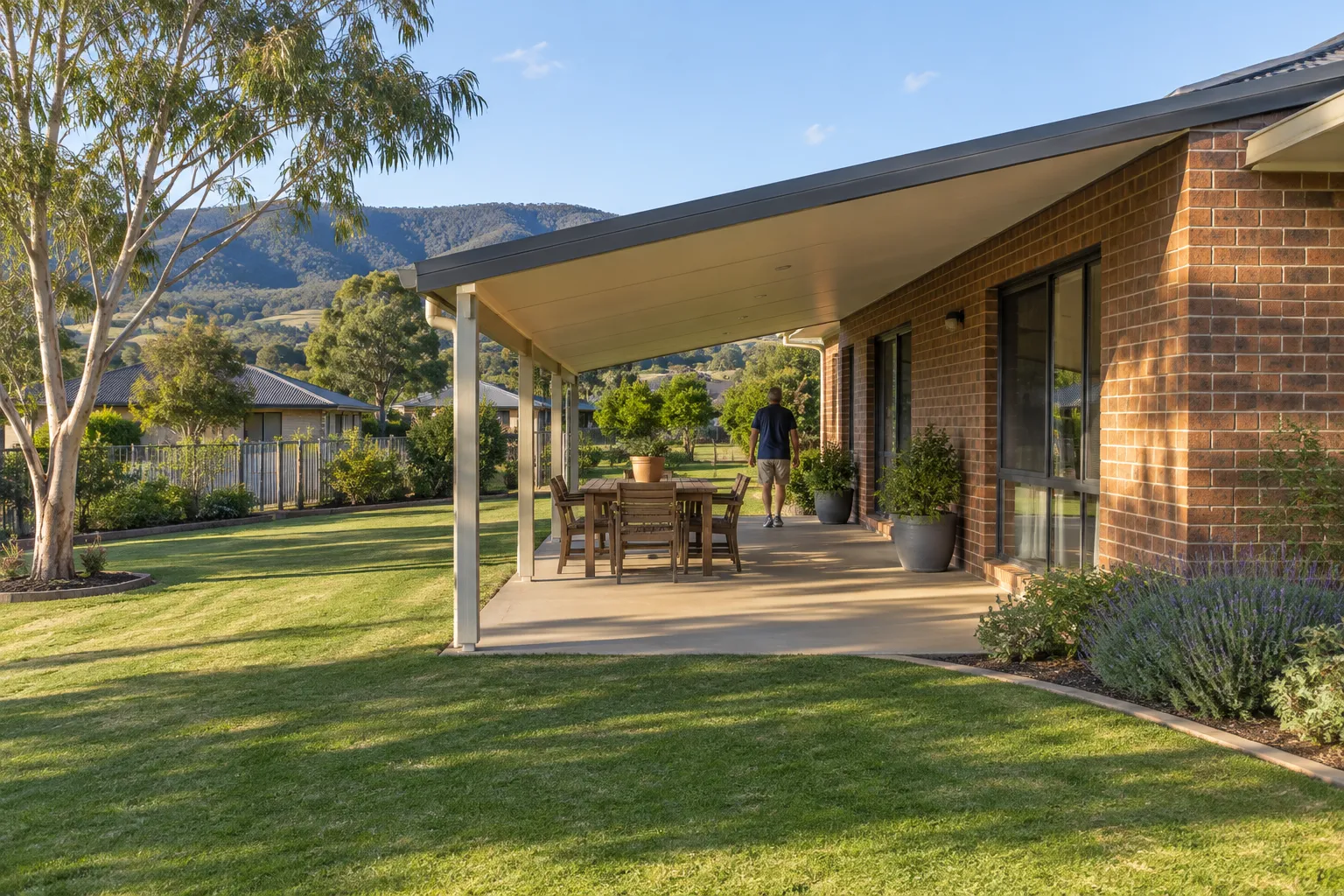
An alfresco is usually a covered outdoor room under the main house roof. A patio is a covered area added at the back with its own roof. A verandah is a roofed area attached along the house, often at the front or side in traditional style. In Victoria, patios and verandahs attached to the house are treated alike for building permits.
See verandah vs patio and pergola vs patio vs alfresco.
Do verandahs and pergolas need approval?
In Victoria, the VBA says verandahs need a building permit, while an unroofed pergola up to 20 square metres and 3.6 metres high, no further forward than the house, is usually exempt. In NSW, both can be exempt development if they meet every standard for size, height and location. Heritage areas, like Beechworth and Yackandandah, often need a planning permit too.
See pergola approval.
Questions people ask
Is a verandah better than a pergola?
Not better, just different. A verandah gives full shade and rain cover attached to the house, and suits traditional homes and shading windows. A pergola gives filtered shade, a lighter garden feel and costs less. Choose based on whether you need shelter from rain or just shade.
Can a pergola be called a verandah?
Once a pergola attached to the house has a solid roof, it works like a verandah, and in Victoria it's treated as one for building permits. Some people use the words loosely. In general, if it's roofed and attached to the house, it's a verandah or patio; if it's open on top, it's a pergola.
Does a verandah add value?
A well-built verandah that suits the house can add appeal and usable outdoor space, especially on older homes and in hot climates like Albury's. How much value it adds depends on the house and market, so there's no fixed figure. A verandah that needed a permit should have one.
What is a verandah used for?
A verandah shades the house walls and windows, keeps rain off doors and outdoor seating, and creates a sheltered place to sit, often facing the street or garden. On older Australian homes, verandahs were designed to keep houses cooler in summer, and they still do that job well.
The rest of our guides start from deck builder in Albury.
Where these facts come from
- Victorian Building Authority, landscaping and outdoor structures
- Published installed verandah, patio and pergola prices from Australian cost guides, checked November 2026
Updated