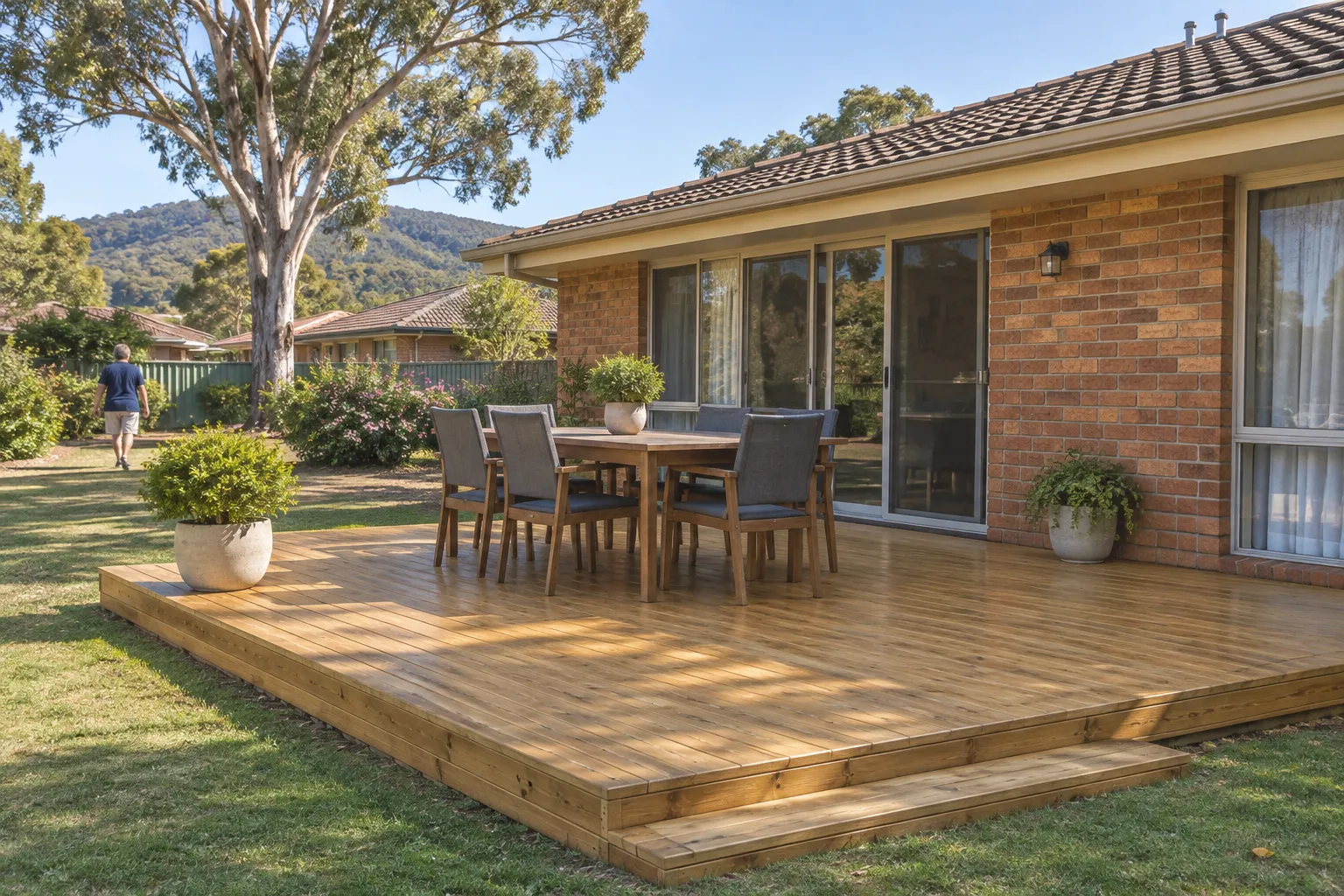
A well-built treated pine deck commonly lasts around 15 to 20 years, and a durable hardwood deck can last much longer: Business Queensland rates spotted gum heartwood class 1 above ground, with a life expectancy of more than 40 years. In practice, most wooden decks wear out at the frame, the footings or the fixings before the boards. Low decks with poor airflow, decks that are never oiled, and decks on damp ground wear out fastest. For costs and how we arrange a builder, see our Albury deck builder home page.
How long do different decking timbers last?
The timber's natural durability class is the best guide. Class 1 timbers last longest above ground. Spotted gum and merbau are both class 1 above ground, though merbau is only class 3 in the ground. Treated pine relies on its preservative and its hazard class. Above ground, with good airflow and regular oil, all of these can give long service.
| Timber | Above-ground durability | Typical deck life (well built) |
|---|---|---|
| Treated pine (H3 boards) | Depends on treatment | About 15 to 20 years |
| Merbau | Class 1 | 20 years or more |
| Spotted gum | Class 1, life expectancy over 40 years | 20 to 40 years or more |
Durability ratings describe the heartwood. Sapwood and poor detailing shorten the real life.
Why do deck frames usually fail first?
The frame sits closer to the ground, stays damp longer and gets less airflow than the boards above, so it's more exposed to rot and termites. A deck with H3 joists in a low, damp spot can fail at the frame years before the boards. Footings that move in Albury's reactive clay, and fixings that rust, also end decks early.
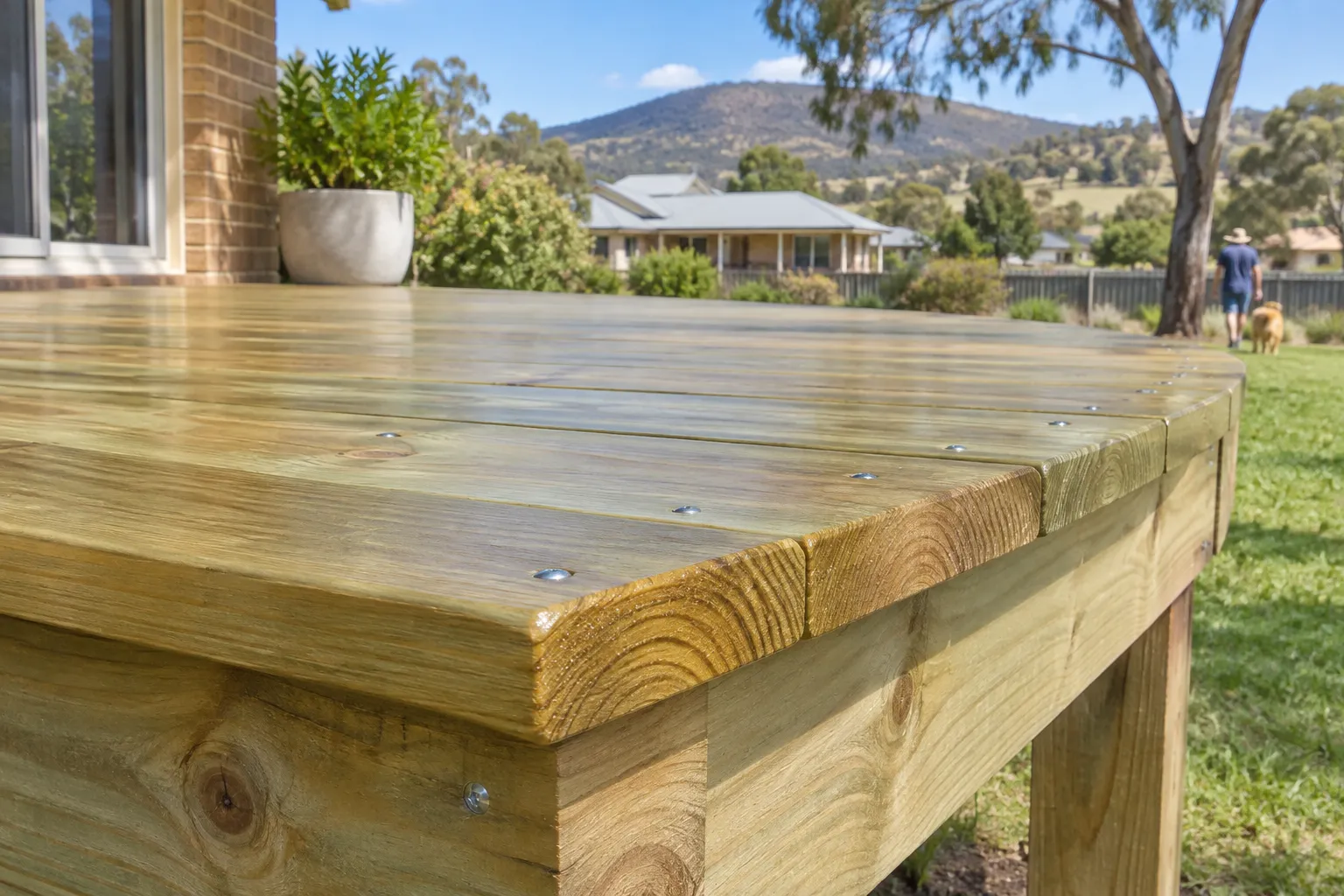
The signs to check from underneath:
- Soft or crumbling timber when you push a screwdriver in.
- Dark staining and mould on joists and bearers.
- Posts rotting at ground level.
- Rusty or loose bolts and brackets.
See how long a deck frame lasts.
What makes a wooden deck last longer?
The things that make the biggest difference are the right timber and treatment for each part, good airflow under the deck, gaps between boards so water drains, regular oiling, and fixing problems early. Covering a deck with a pergola or patio roof also slows weathering. Most of these cost little if they're done from the start.
A checklist for a long-lasting timber deck:
- Treatment. H3 for ventilated parts, H4 for low frames, H5 for anything in the ground.
- Clearance and airflow. Open or vented sides on low decks.
- Gaps. Between boards and at walls.
- Fixings. Stainless or hot-dipped galvanised.
- Oil. Every 12 to 24 months in Albury's sun.
How does Albury's climate affect a wooden deck?
Albury's hot, dry summers and cold, wet, frosty winters make timber swell and shrink through the year. Strong summer sun dries and greys the surface, causing checking and cracks if it isn't oiled. Wet winters keep low frames damp. Reactive clay soils can move footings. A well-detailed, well-oiled deck copes with all of this.
West- and north-facing decks get the most sun and need oiling most often. See deck oiling for timing.
What are the signs a wooden deck is near the end?
A deck is near the end of its life when the frame is soft, the footings have sunk or tilted, the floor bounces or slopes, or many boards are rotten rather than just weathered. A deck that's grey and rough but structurally sound can often be restored with sanding and oil, which costs far less than replacing it.
If you're weighing it up, see repair or replace deck boards and replacing deck cost.
Does treated pine last as long as hardwood?
Usually not. Treated pine decks commonly last around 15 to 20 years, while durable hardwoods like spotted gum can last much longer above ground. Pine is softer, so it wears, cracks and splinters sooner, especially without oil. It's still good value for a budget deck or one you plan to replace. See treated pine decking.
Questions people ask
How long does a pressure treated deck last?
A treated pine deck, which is pressure treated with a preservative, commonly lasts around 15 to 20 years when it's built well, with the right hazard class for each part, good airflow and regular oiling. Low decks with H3 frames close to damp ground, or decks never oiled, can wear out much sooner.
How long does a deck substructure last?
A deck's substructure, meaning its footings, posts, bearers and joists, lasts as long as its materials and detailing allow. H4 or H5 treated pine in the right places, sealed cut ends and good airflow help timber frames last decades. Galvanised steel frames don't rot. Poor airflow and the wrong treatment class shorten frame life most.
Can you make an old deck last longer?
Often, yes. Cleaning and oiling the boards, replacing a few rotten boards, tightening or replacing fixings, clearing debris to improve airflow, and fixing drainage can add years to a structurally sound deck. If the frame is failing, those steps won't save it. A builder can check the frame and advise.
How long does a hardwood deck last without oil?
A durable hardwood deck left unoiled still lasts a long time structurally above ground, because the timber's natural durability doesn't depend on oil. It will turn silver grey and check more on the surface, which can roughen it and make it more prone to splinters. Oiling keeps the colour and slows that surface wear.
Where these facts come from
- Business Queensland, spotted gum timber properties
- Queensland Government timber database, merbau fact sheet
- WoodSolutions, natural durability ratings
- Published decking cost guides with lifespan estimates, checked November 2026
Updated