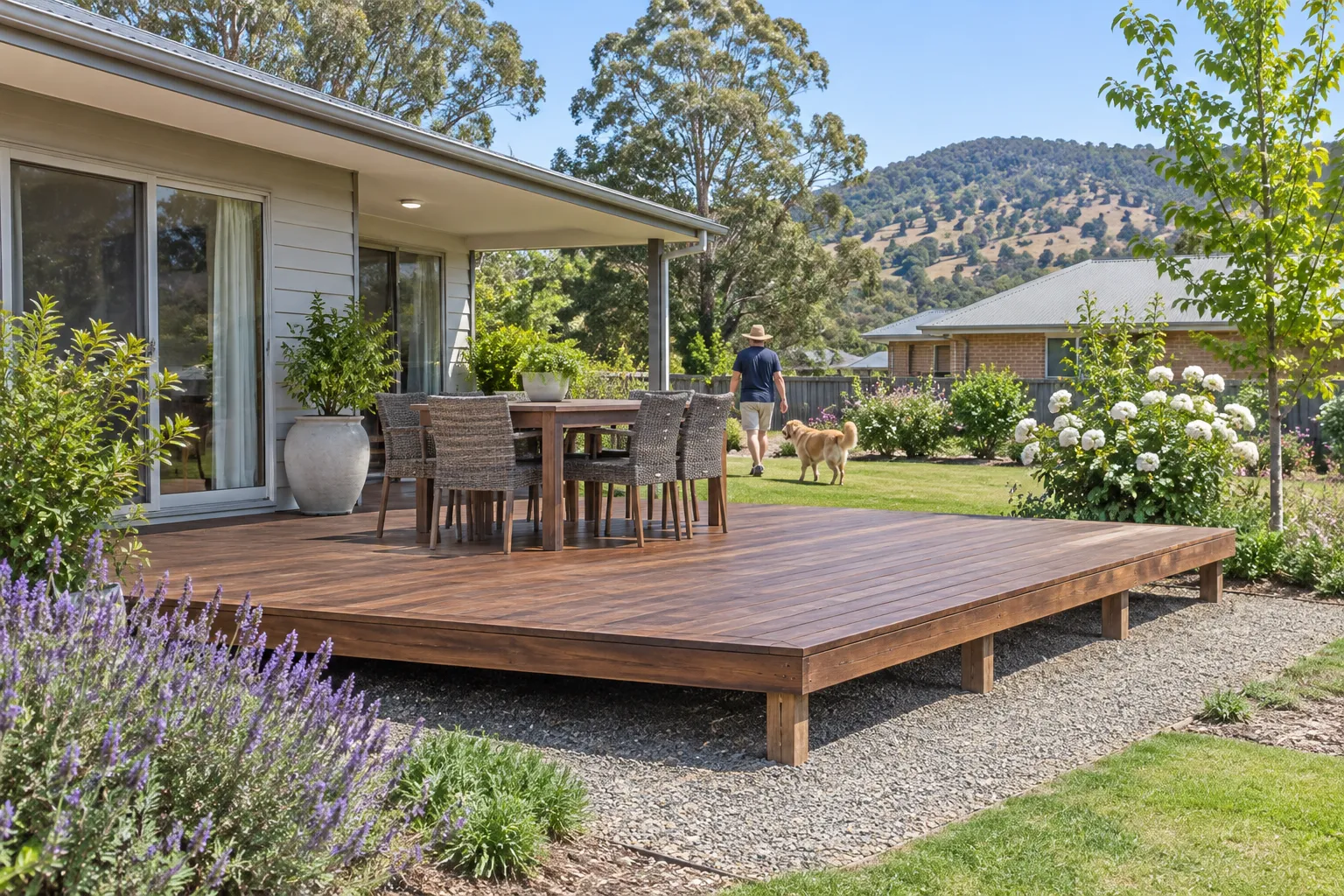
To build a ground-level deck, remove grass and topsoil, lay a compacted crushed rock base with weed mat, set footings or deck blocks, build a low-profile frame from H4 treated pine or steel, leave airflow and drainage underneath, then lay and finish the boards. Over a concrete slab, use a batten or pedestal system that lifts the boards so water drains. Low decks stay damp longer than raised ones, so the frame material and airflow matter most. For costs and how a quote works, see our Albury deck builder home page.
Why do ground-level decks need extra care?
Ground-level decks have little space underneath, so the frame stays damp longer and gets less airflow. That's when timber rots and termites find it. WoodSolutions says decks with less than 400 millimetres of clearance should use H4 treated pine or a class 1 hardwood for the frame, rather than H3. Good drainage and some open sides help the frame dry out.
How do you prepare the ground for a low deck?
Mark out the deck, remove grass, roots and topsoil, and level the area with a slight fall away from the house. Lay weed mat to stop growth underneath, then a layer of compacted crushed rock where footings or blocks will sit. Make sure surface water can drain away, not pool under the deck.
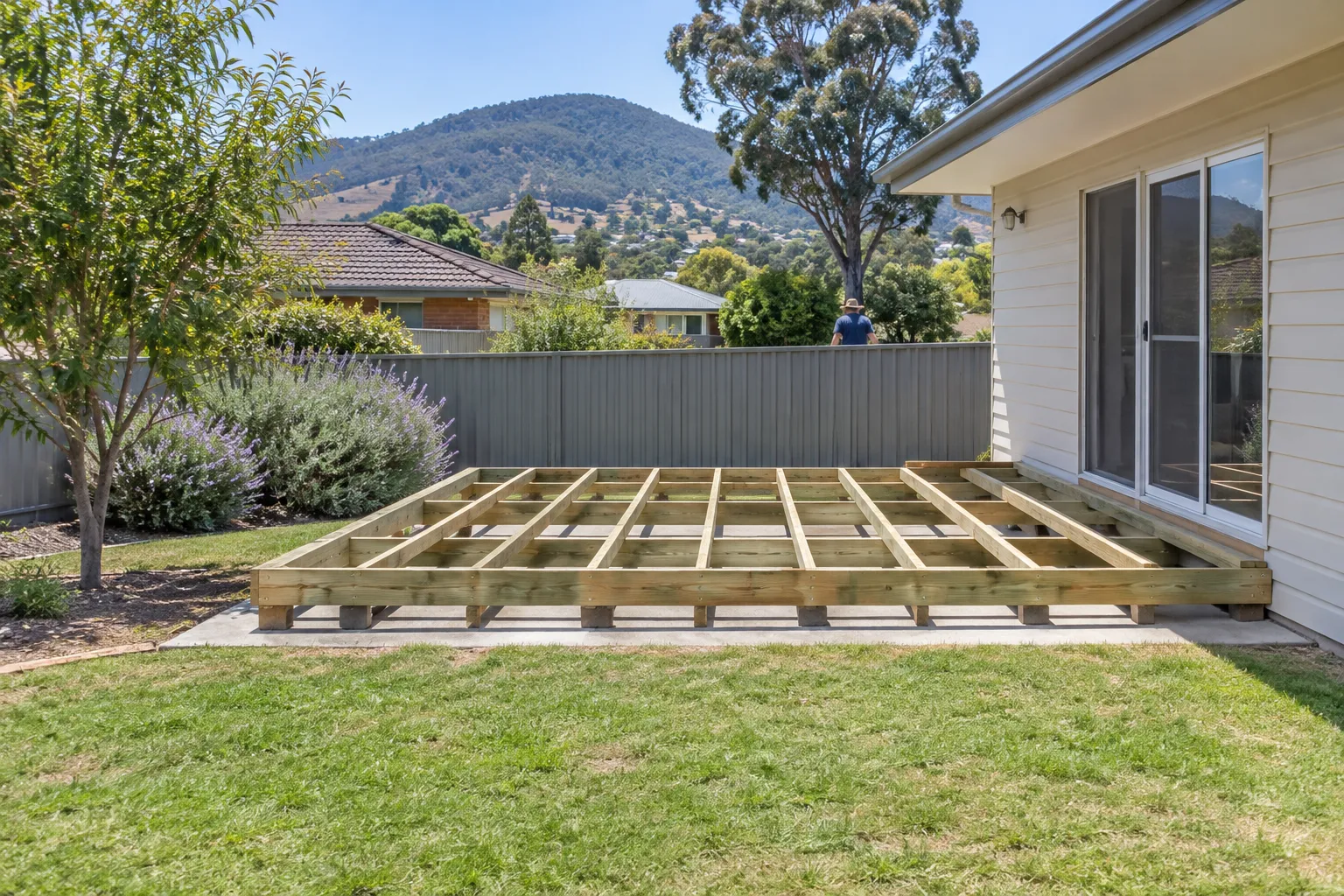
The steps:
- Mark out the deck with string lines and pegs.
- Strip grass and topsoil.
- Grade the ground to fall away from the house.
- Weed mat over the area.
- Compacted rock under footings or blocks.
What footings does a ground-level deck need?
Small, freestanding, very low decks on firm, stable ground can sit on deck blocks over a compacted rock base. On Albury's reactive clay, or for larger decks or decks attached to the house, dug concrete footings with galvanised post brackets are more reliable, because they move less. Keep all timber clear of the soil.
See deck blocks for when blocks work.
How do you build a low-profile frame?
A low frame often uses joists sitting directly on short posts, brackets or blocks, or a single layer of joists on bearers set into the ground level, to keep the deck height down. Use H4 treated pine or a galvanised steel frame, keep the joist spacing your boards need, and leave gaps at the sides or vents so air can move. Seal every cut end of treated pine.
Low-frame tips:
- H4 or steel, not H3, for the frame.
- Side gaps or vents for airflow.
- A gap at the house wall so water drains.
- Joist spacing to suit the boards, often 450 millimetres for hardwood.
How do you build a deck over a concrete slab?
Over a concrete slab, use timber or aluminium battens, or adjustable pedestals, fixed or set on the slab, so the boards sit above the concrete with space underneath for water to drain. The slab should fall away from the house. Battens should run the same way as the fall so they don't dam water. Never lay boards straight on concrete.
Composite boards often have their own low-profile batten or pedestal systems. See composite decking installation.
Which boards suit a ground-level deck?
Boards that cope with damp suit low decks best. Narrower timber boards cup less than wide ones. Composite boards don't rot and suit low decks well on the right frame. Durable hardwoods like spotted gum and merbau are rated class 1 above ground and work well with good airflow. Treated pine boards need regular oiling.
See best timber decking and composite decking.
Do ground-level decks need approval?
Low decks are the most likely to be exempt in NSW, because the floor must be no more than 1 metre above ground among the other standards, such as size and sitting behind the building line. In Victoria, most decks need a building permit, though the VBA notes that slats laid straight on the ground without a supporting structure usually aren't considered a deck.
See do you need council approval for a deck.
Questions people ask
Can you build a deck directly on the ground?
No. Decking needs a frame that lifts the boards off the ground, so water drains and air moves underneath. Boards laid straight on soil rot quickly. Even the lowest deck needs a frame on footings, blocks or a compacted base, with H4 treated pine or steel for the frame.
How low can a deck be built?
A deck can be built quite low, but the frame still needs some clearance and airflow. Below about 400 millimetres, WoodSolutions recommends H4 treated pine or a class 1 hardwood frame. Leave some open sides or vents, a gap at the house wall, and make sure water drains away from under the deck.
Do you need weed mat under a deck?
It's a good idea. Weed mat under a low deck stops grass and weeds growing up through the gaps and reduces organic matter that holds moisture. Lay it over the cleared ground, then a layer of rock where the footings sit. Make sure water can still drain through or away.
Is a ground-level deck cheaper to build?
Usually, yes. A ground-level deck needs less frame, no balustrade and often simpler footings, so it's at the lower end of published decking prices, about $180 to $350 a square metre for treated pine. Using H4 or steel for the frame adds a little, but it's worth it on a low deck.
Where these facts come from
Updated