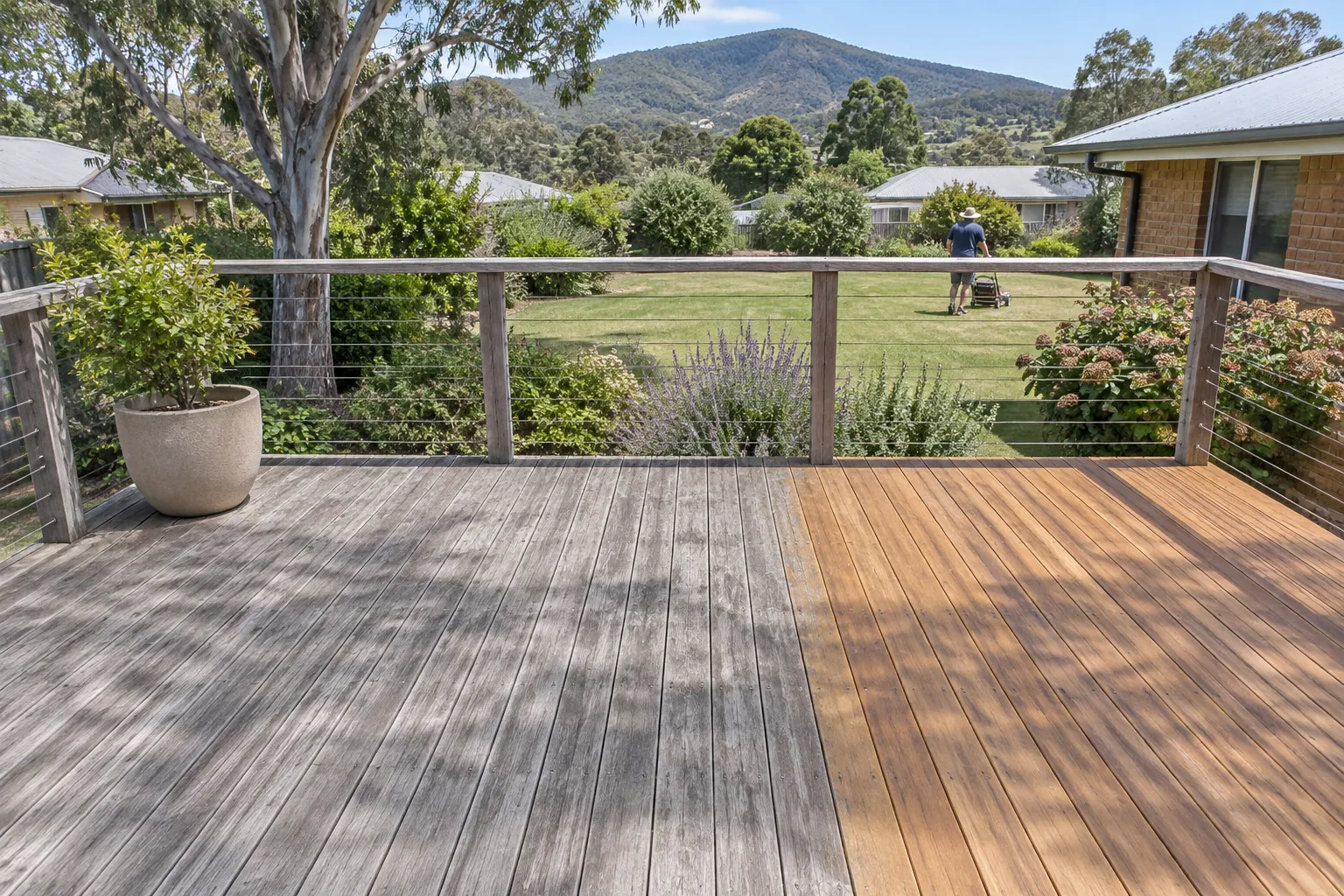
Timber decking restoration brings an old deck back to sound, good-looking condition: checking and repairing the frame, replacing rotten or split boards, replacing rusted or popped fixings, sanding back to fresh timber, then refinishing with oil or stain. A full restoration on a sound frame usually costs a fraction of a new deck. Published NSW guides put sanding and two coats at about $35 to $70 a square metre, with repairs on top, compared with about $180 to $700 a square metre for a new deck. For oiling and staining, see our main deck oiling, staining and restoration page.
What does a full deck restoration include?
A full restoration covers the structure and the surface. It starts underneath with the frame and footings, then moves to the boards and fixings, and finishes with sanding and new coats. The order matters: there's no point refinishing boards on a frame that's failing.
| Stage | What's done |
|---|---|
| Inspect | Frame, footings, fixings, board condition |
| Structural repairs | Replace rotten joists, re-level or replace posts |
| Board repairs | Replace soft, split or badly cupped boards |
| Fixings | Replace rusted or popped nails and screws |
| Surface | Clean, revive, sand to fresh timber |
| Finish | Two coats of oil or stain |
How do you check if a deck is worth restoring?
Look underneath first. Push a screwdriver into the joists, bearers and posts, especially near the ground. If they're firm, the deck is usually worth restoring. If many are soft, crumbling or termite damaged, or the footings have sunk, replacing the deck may make more sense. On top, a few bad boards are easy to swap; many bad boards point to a bigger problem.
See repair or replace deck boards and how long a deck frame lasts.
How are rotten boards and fixings dealt with?
Rotten, split or badly cupped boards are cut out and replaced with matching timber, landing each join on a joist. While boards are up, the joists underneath are checked. Rusted nails or screws are replaced, usually with stainless or galvanised decking screws, which hold better and stop staining. Popped nails are punched down or replaced so the sander doesn't catch.
New boards won't match old weathered boards at first. Sanding the whole deck and applying a tinted oil helps them blend in.
How is the surface brought back?
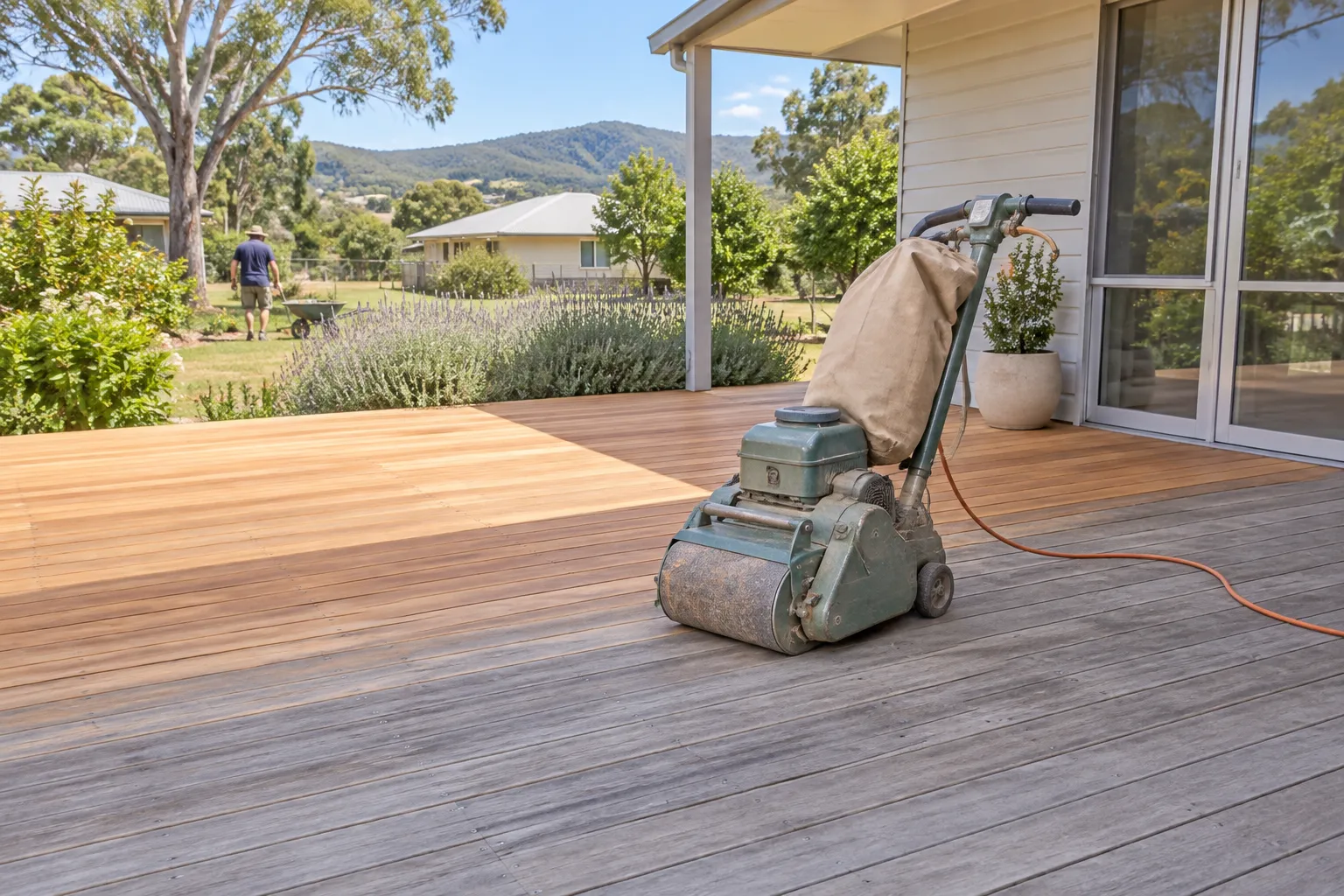
After repairs, the deck is cleaned, then sanded with a floor or belt sander to remove the grey, weathered layer and any old coating, with detail sanders for edges and steps. The dust is cleared from the boards and gaps. Then two thin coats of penetrating oil or stain go on. A tinted oil helps new and old boards look even.
For the finishing steps, see deck sanding and staining and how to oil a deck.
What does timber deck restoration cost?
It depends on how much repair is needed. Published NSW guides put a sand and two coats at about $35 to $70 a square metre, and stripping a failed coating at about $55 to $95. Board and fixing repairs are usually priced by the board or by the hour. Even with repairs, restoring a sound deck usually costs far less than building new at about $180 to $700 a square metre.
See deck restoration cost and replacing deck cost.
When is it better to replace than restore?
Replace when the frame is widely rotten, the footings have failed, the deck bounces or leans, there's significant termite damage, or most of the boards are bad. Also consider replacing if the deck no longer meets current rules, such as a missing balustrade on a high deck, and fixing it would cost close to a new deck.
How do you keep a restored deck looking good?
Recoat it before it weathers again: in Albury's sun, a clean and recoat every 12 to 24 months. Keep the gaps clear, sweep often, wash it each season and make sure water drains away from the frame. Fix any lifted board or popped screw as soon as it appears, so water doesn't get into the timber below.
Questions people ask
How do you restore an old timber deck?
Check the frame underneath, repair or replace any rotten structure, replace bad boards and rusty fixings, then clean, revive and sand the boards back to fresh timber, and apply two coats of oil or stain. The structure comes first, because refinishing a deck on a failing frame wastes money.
Can a grey deck be restored?
Usually, yes. Grey is a surface change from sun and rain. A timber reviver lifts much of the grey, and a sand back removes the rest to show fresh timber. Then oil or stain brings the colour back. If the boards are also soft or split, they'll need replacing as part of the job.
How long does a deck restoration take?
A sand and refinish on a 30 square metre deck usually takes two to four days. Board and frame repairs add time, depending on how much is needed. The deck needs dry weather for sanding and finishing. The specialist gives you a timeframe with the quote after checking the deck.
Is it worth restoring a treated pine deck?
Often, yes, if the frame is sound. Treated pine boards can be sanded and refinished, and bad boards replaced. If the frame was built with too little treatment for a damp spot and is rotting, a rebuild may be better. WoodSolutions advises H4 for decks with less than 400 millimetres clearance.
For the wider picture, start with deck builder across Albury.
Where these facts come from
- WoodSolutions, preservative treatments and use classes
- Published deck restoration and building prices from Australian cost guides, checked November 2026
Updated